AAC Steam Boiler
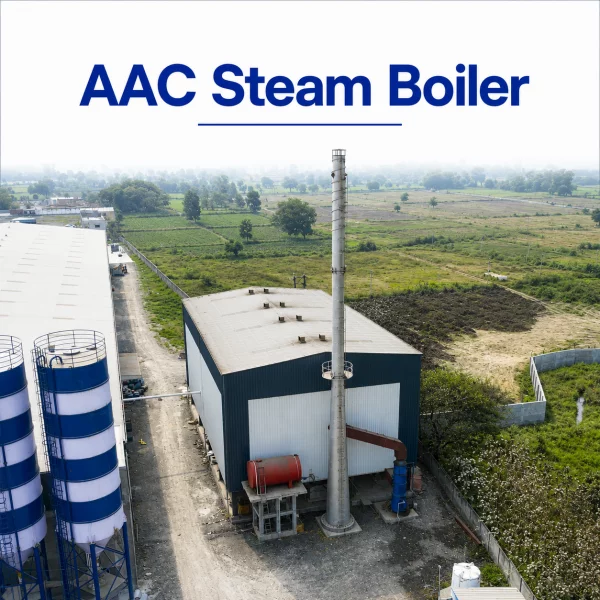
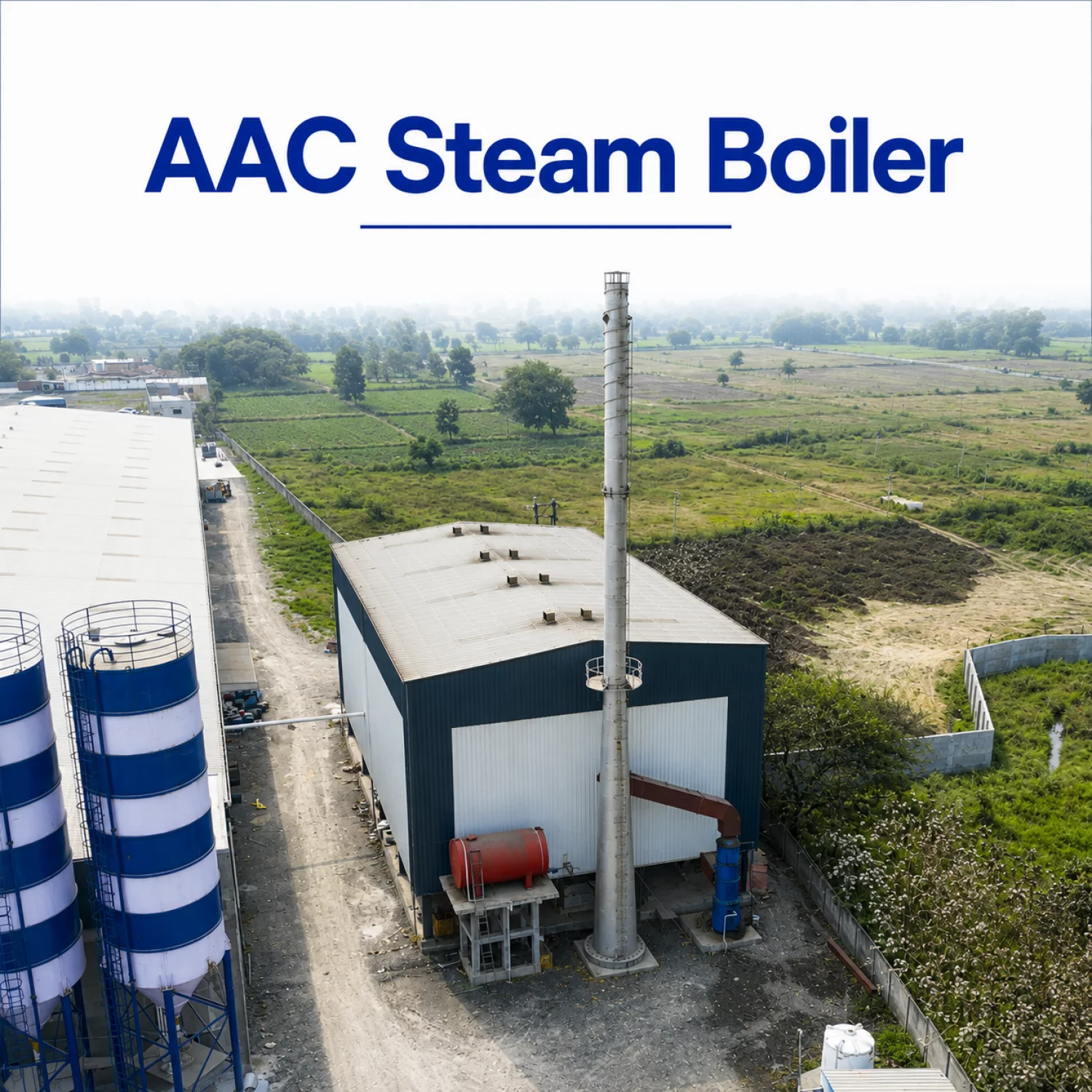
AAC Steam Boiler Details
In an AAC plant, the autoclave gets much of the attention, but the steam boiler is the part that feeds the entire curing process. Without a steady steam supply, the autoclaving schedule can slow down and disturb the production flow. We manufacture and supply AAC Steam Boiler in Ahmedabad, Gujarat, for AAC block manufacturing plants across India, with boiler selection based on the actual steam requirement of the plant rather than only its daily block production.
Steam Requirement Comes Before Boiler Selection
A common shortcut in the AAC industry is to match plant capacity directly with boiler capacity. For example, someone may say that a particular production volume needs a fixed TPH boiler. That's useful for an initial discussion, but it isn't enough for proper engineering.
Two AAC plants producing a similar daily volume can have different steam requirements. Autoclave size, number of autoclaves, cycle duration, feed-water temperature, condensate recovery and steam reutilization all affect the final boiler requirement.
| Plant Factor | Effect on Steam Requirement |
|---|---|
| Production Capacity | Provides the starting point for calculating overall steam demand. |
| Autoclave Quantity | More autoclaves can increase total and peak steam demand. |
| Autoclave Size | Diameter, length and loading pattern affect steam consumption. |
| Cycles per Day | More cycles can increase daily steam requirement. |
| Feed-Water Temperature | Colder water requires more energy before steam generation. |
| Condensate Recovery | Recovered hot condensate can reduce fresh heating requirements. |
| Steam Reutilization | Steam management and reuse can reduce fresh steam demand. |
Why Autoclave Design Matters So Much
The autoclave is one of the main steam-consuming sections of an AAC plant. Its volume, operating pressure, loading arrangement, number of cakes per batch and cycle frequency all affect the steam demand.
That's why we don't treat the AAC Steam Boiler as an isolated machine. We look at the complete steam requirement before deciding the suitable boiler arrangement. AAC autoclaves are commonly designed around a pressure of about 17.5 kg/cm², while the exact working and design parameters depend on the overall plant engineering.
Feed Water and Condensate Can Change the Calculation
The temperature of water entering the boiler matters. When the feed water is colder, more energy is required to bring it to the required steam-generation condition. A suitable feed-water preheating arrangement can reduce this additional energy requirement.
Condensate recovery is another important part of the system. Hot condensate coming back from the autoclaving process still contains useful heat. Returning suitable condensate to the boiler system can reduce fuel use and the energy needed for feed-water heating.
Steam reutilization can also be considered where the plant design allows it. Steam released during one part of the autoclave cycle may be managed and reused within the steam system, reducing the requirement for fresh steam.
Too Small or Too Large Both Create Problems
Boiler sizing isn't about choosing the biggest available model. An undersized boiler can struggle when several autoclaves require steam at the same time. This can affect the planned autoclaving cycle and create a bottleneck between block production and curing.
| Boiler Selection | Possible Result |
|---|---|
| Undersized Boiler | Limited steam availability during higher demand |
| Undersized Boiler | Slower heating and pressure build-up during autoclaving |
| Undersized Boiler | Possible disturbance to the planned production cycle |
| Oversized Boiler | Higher initial investment |
| Oversized Boiler | Higher installation and utility requirements |
| Oversized Boiler | May operate less economically when regularly running at low load |
The practical target is a boiler that matches the real steam demand of the AAC plant. We also consider realistic future expansion instead of adding a large allowance for an expansion that may never happen.
The Boiler Works as Part of a Larger Steam Network
AAC Steam Boiler performance depends on the rest of the steam system as well. The basic flow connects the boiler with the main steam header, steam distribution lines, autoclaves, condensate recovery and feed-water system.
Boiler → Main Steam Header → Steam Distribution → Autoclaves → Condensate Recovery / Steam Management → Feed Water System
A large boiler can't solve problems caused by poor steam distribution or unsuitable piping. The complete system needs to be considered together so steam reaches the autoclaves as required.
Points to Check Before Finalising Your Boiler
- AAC plant production requirement
- Number and dimensions of autoclaves
- Number of autoclaving cycles per day
- Peak steam requirement
- Expected feed-water temperature
- Condensate recovery arrangement
- Steam reutilization possibilities
- Boiler efficiency and heat-transfer area
- Fuel type and fuel consumption per tonne of steam
- Working and design pressure requirements
- Pressure controls, safety valves and interlocks
- Realistic plans for future plant expansion
Technical Parameters for AAC Steam Boiler Planning
| Parameter | Planning Requirement |
|---|---|
| Application | Steam generation for AAC autoclaving process |
| Boiler Capacity | Selected according to calculated steam requirement |
| Autoclave Pressure Reference | Commonly around 17.5 kg/cm² design pressure |
| Feed Water | Temperature and preheating arrangement considered during planning |
| Condensate | Recovery potential considered in steam system design |
| Fuel | Selected according to project requirements and boiler design |
| Steam Distribution | Main header and piping planned with the autoclave system |
Questions We Hear During AAC Boiler Selection
What does an AAC Steam Boiler do?
It generates the high-pressure steam supplied to AAC autoclaves for the hydrothermal curing process.
Does a 500 m³/day AAC plant always need a 6 TPH boiler?
No. A fixed TPH number shouldn't be treated as an engineering rule. The actual requirement depends on the autoclaves, cycles, steam losses, feed-water condition, condensate recovery and other plant factors.
Can boiler capacity be planned for future expansion?
Yes. A realistic expansion plan can be considered during project design. Oversizing heavily for an uncertain future project may not be economical.
Why is condensate recovery important?
Hot condensate can carry useful thermal energy. Recovering it can reduce the fresh energy needed for feed-water heating and steam generation.
If you're setting up an AAC block manufacturing plant in Ahmedabad, Gujarat or anywhere in India, talk to us before finalising your steam system. We can discuss your production capacity, autoclave arrangement, steam requirement and project plans to help select a suitable AAC Steam Boiler for your plant.
Related Products
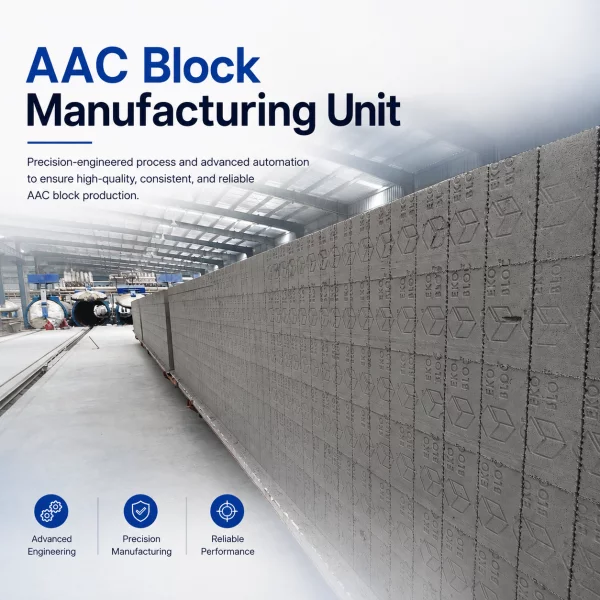
AAC Block Manufacturing Unit
Starting an AAC block production business needs more than arranging a few machines on a factory floor. The complete proc... Continue
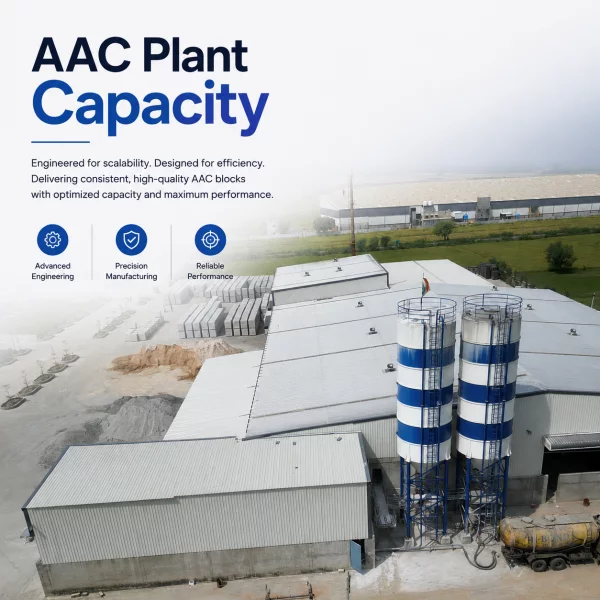
AAC Plant Capacity
Choosing an AAC plant capacity isn't only about deciding how many blocks you want to make in a day. The complete product... Continue
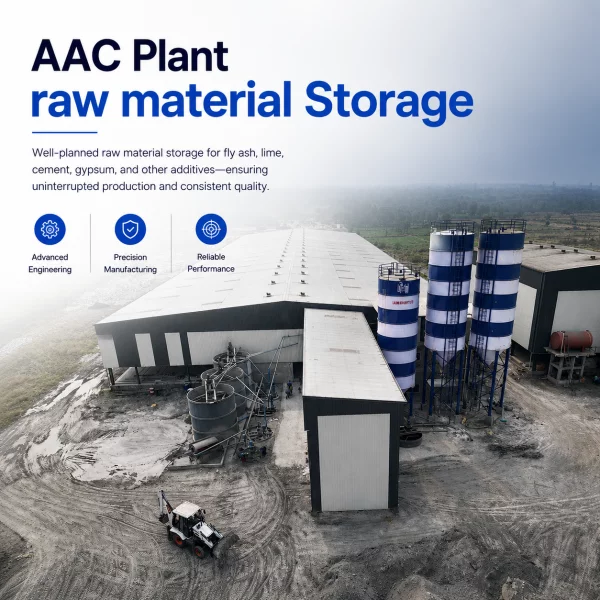
AAC Plant Raw Material Storage
Raw material storage can look like a simple part of an AAC plant, but poor planning here can create problems much later.... Continue
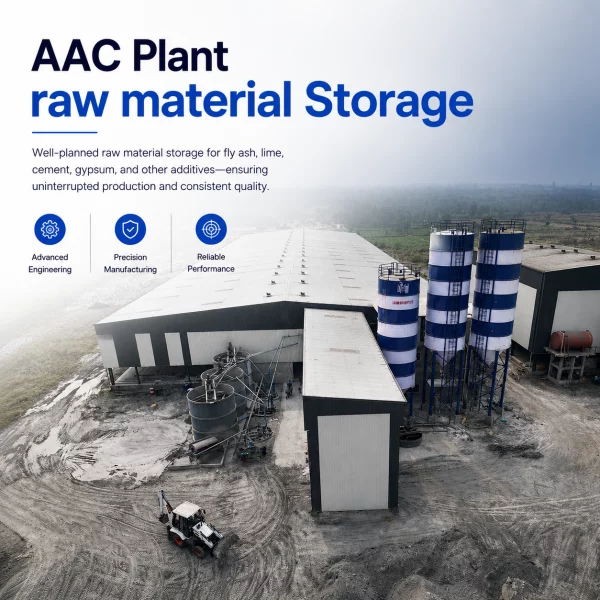
AAC Batching System & Raw Material Preparation
Every AAC block starts with a measured mix. Before the slurry reaches the mould, fly ash or sand, cement, lime, gypsum, ... Continue
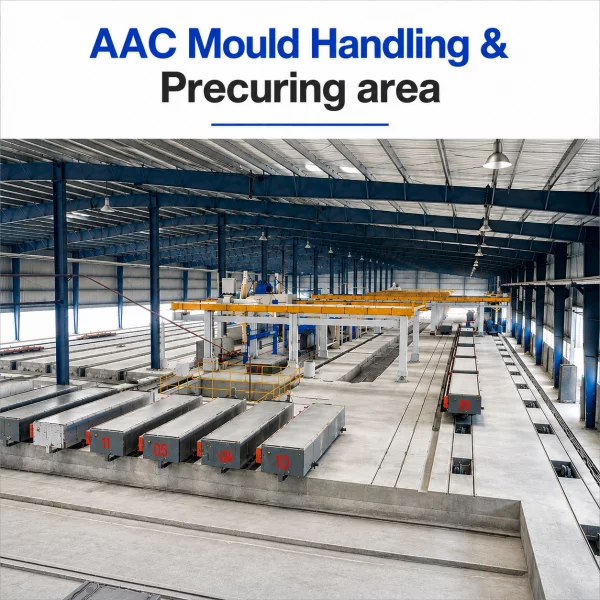
AAC Mould Handling & Precuring
Once the AAC slurry is poured into a mould, the production process has only started. The filled mould has to move to pre... Continue
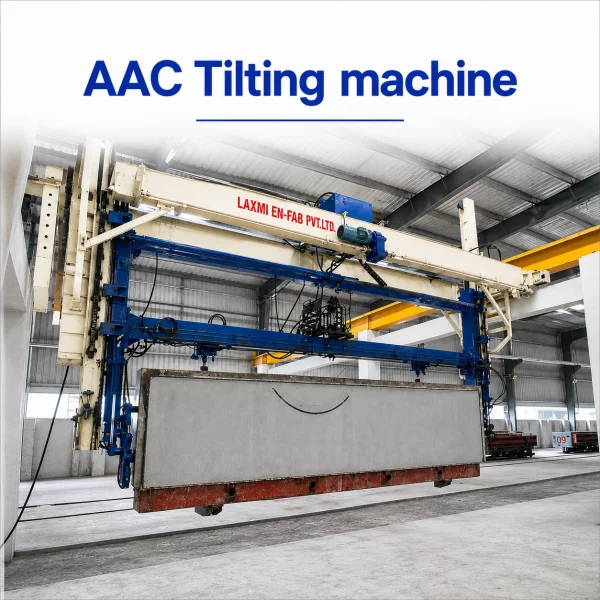
AAC Tilting Machine
There’s a short stage between precuring and cutting where the condition of the green cake can change the result of... Continue
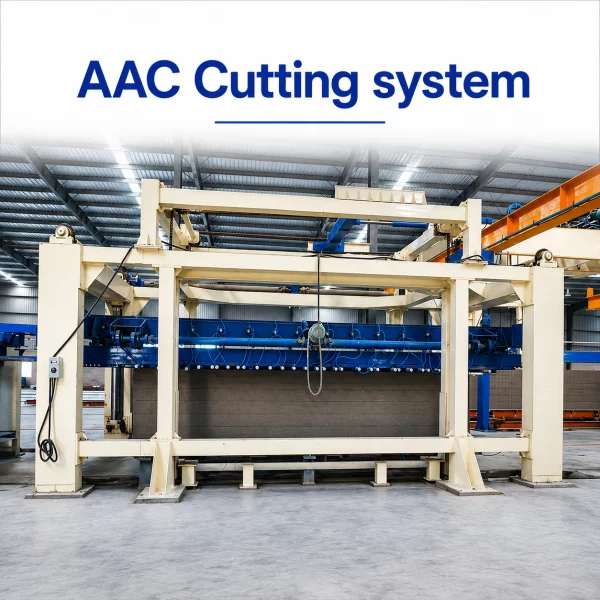
AAC Cutting System
Cutting is the stage where a freshly prepared AAC green cake starts taking the shape of the final block. A good cutting ... Continue
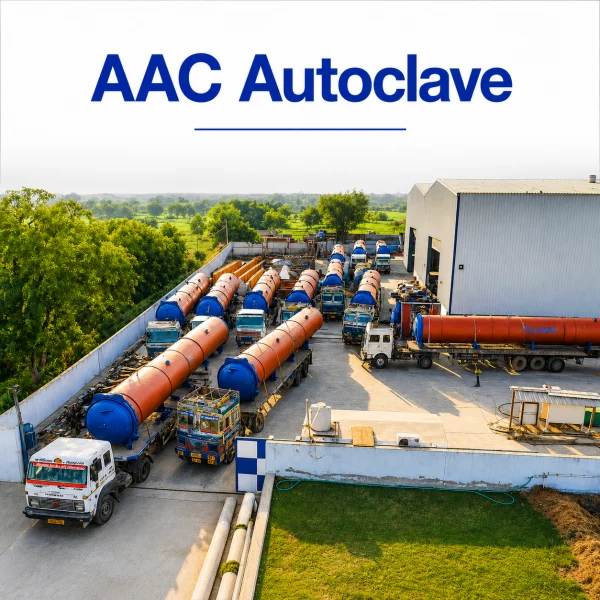
AAC Autoclave
Final AAC block strength is not created at the cutting stage alone. The most important transformation happens inside the... Continue
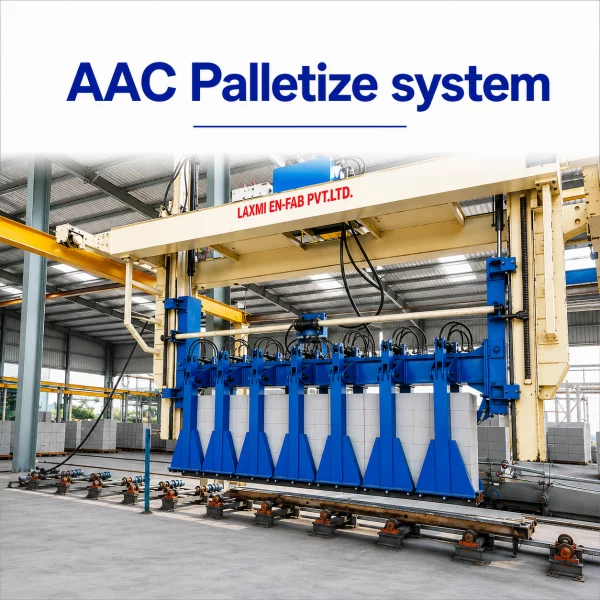
AAC Auto Palletizing System
AAC block production doesn't stop when the autoclave cycle is complete. The finished blocks still have to be unloaded, s... Continue