AAC Mould Handling & Precuring
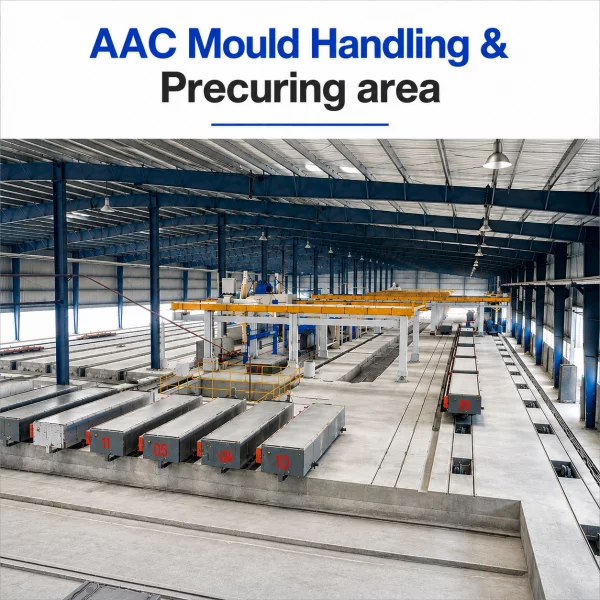
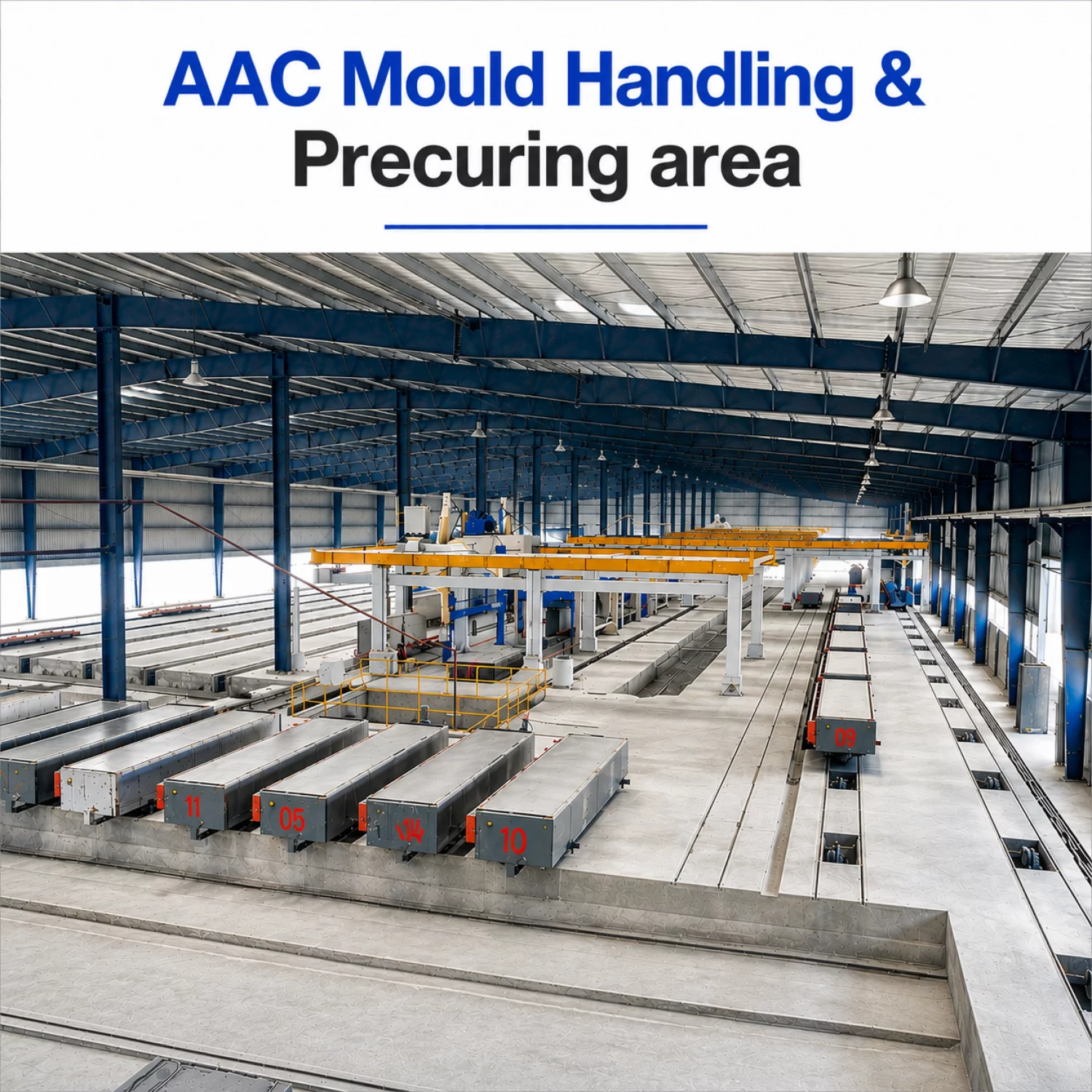
AAC Mould Handling & Precuring Details
Once the AAC slurry is poured into a mould, the production process has only started. The filled mould has to move to precuring, stay there for the right period, reach the tilting section, and later return for cleaning and fresh oil application. If mould movement or precuring timing isn't handled properly, the effect can show up later as uneven cake hardness, cutting issues or production delays. We manufacture AAC Mould Handling & Precuring systems in Ahmedabad for AAC block plants across Gujarat and India.
One Mould, Several Important Production Stages
The mould keeps moving through the AAC production cycle. A properly planned handling system connects each stage without making operators repeatedly move heavy moulds by hand.
Slurry Pouring → Mould Transfer → Precuring → Tilting → Cake Cutting → Empty Mould Cleaning & Oiling → Ready for Re-Pouring
After slurry pouring, the filled mould is transferred towards the precuring room through a ferry cart and mould transfer arrangement. It remains there until the green cake reaches enough hardness for further handling. From there, the mould moves to the tilting station, where the cake is prepared for cutting.
Choosing the Right Level of Mould Movement
Not every AAC plant needs the same level of automation. A smaller plant may work well with manual mould movement, while a higher-capacity plant may need automatic transfer to keep the production cycle moving at the required speed.
| Handling Type | Movement Method | Suitable Application |
|---|---|---|
| Manual | Mould moved by hand along rails | Smaller plants or plants with lower automation needs |
| Semi-Automatic | Dragging conveyor or assisted movement | Medium automation with controlled investment |
| Fully Automatic | Automated transfer using friction-wheel based movement | Higher-capacity and highly automated plants |
Automatic mould handling can reduce manual movement and help keep different production stages better synchronized. At the same time, manual and semi-automatic systems still make practical sense where plant capacity, manpower and investment plans call for a simpler arrangement.
The Ferry Cart Connects Pouring With Precuring
The ferry cart moves moulds between the pouring area and precuring room. Its selection depends on more than just the mould size. We look at plant capacity, number of moulds in circulation, available floor space, cycle time, automation level and the overall plant layout.
When these details are considered together, the ferry cart and mould transfer system can be planned around the actual production flow instead of treating it as a separate piece of equipment.
Precuring Is About More Than Waiting
Precuring gives the freshly cast green cake time to develop enough hardness for handling and cutting. The period is often around 2 to 3 hours, but there's no single timing that suits every AAC plant.
Raw material characteristics, slurry parameters, mix design and temperature can all change the setting behaviour. The target is to get the cake into a condition where it can move and go through cutting without excessive deformation.
- Suitable green cake hardness before cutting
- Better dimensional stability during handling
- Reduced chance of cake deformation
- More predictable cutting conditions
- Better control over the production cycle
Keeping Precuring Conditions More Stable
Weather can affect slurry setting. Temperature changes between seasons can make the same process behave differently if the precuring room isn't controlled properly.
A closed precuring room with controlled heating can reduce this variation. Waste heat or steam from the autoclave can be used through a heat exchanger to maintain a temperature of around 45°C, depending on the plant design and process requirement.
This approach helps reduce the effect of changing outdoor temperatures and gives the green cake a more consistent environment during precuring.
From Precuring to Tilting and Cutting
After the required precuring stage, the filled mould moves towards the tilting section. The tilting arrangement positions the cake for the next cutting operation. The actual setup depends on mould dimensions, cake size and the configuration of the AAC cutting line.
Tilting can also be arranged as manual, semi-automatic or fully automatic. The important point is that mould transfer, precuring and tilting should work as one connected process.
Empty Mould Preparation Starts the Next Cycle
Once the green cake has been removed, the mould isn't simply sent back for another pouring. It needs preparation first.
| Preparation Stage | Purpose |
|---|---|
| Cleaning | Removes remaining material from mould surfaces. |
| Oil Application | Helps reduce adhesion between the mould and the next green cake. |
| Inspection | Allows the mould condition to be checked before reuse. |
| Return to Pouring | Prepares the mould for the next casting cycle. |
Consistent cleaning and mould oil application matter for repeated production. Poor cleaning can leave material on the mould surface, while uneven oiling can affect cake release. Regular mould preparation also helps avoid unnecessary mould wear.
Planning Points for Your AAC Mould Handling System
- Number of moulds required in circulation
- AAC plant production capacity
- Distance between pouring and precuring areas
- Precuring room layout and temperature control
- Required precuring cycle time
- Manual, semi-automatic or automatic handling preference
- Ferry cart movement and transfer arrangement
- Mould dimensions and cake size
- Connection with the tilting and cutting sections
- Cleaning, oiling and mould return arrangement
Technical Planning Snapshot
| Parameter | Typical Planning Basis |
|---|---|
| Application | AAC mould transfer, precuring and mould circulation |
| Precuring Period | Approximately 2–3 hours, depending on process conditions |
| Precuring Temperature | Around 45°C where controlled heating is used, based on process requirement |
| Heating Source | Waste heat or autoclave steam through a suitable heat exchanger |
| Handling Options | Manual, semi-automatic or fully automatic |
| Transfer Equipment | Ferry cart and mould transfer system |
| Post-Cake Process | Cleaning, oil application, inspection and return to pouring |
We manufacture and supply AAC Mould Handling & Precuring systems in Ahmedabad for AAC block manufacturing plants across Gujarat and India. Share your plant capacity, mould dimensions and automation requirement with us, and we can help plan the mould movement and precuring arrangement around your complete AAC production cycle.
Related Products
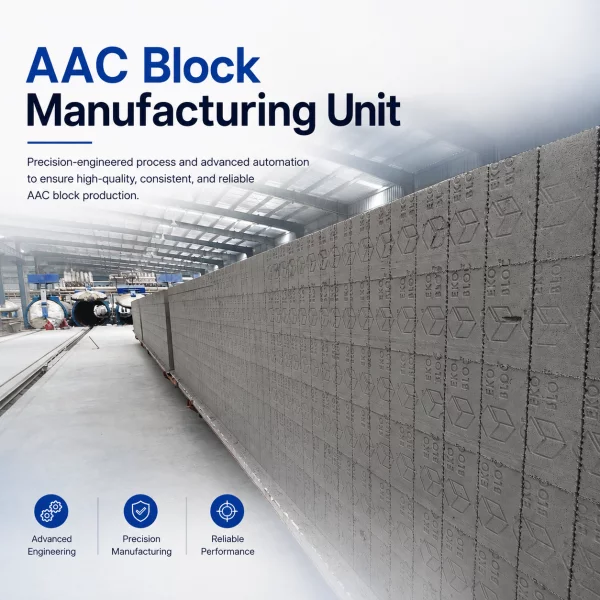
AAC Block Manufacturing Unit
Starting an AAC block production business needs more than arranging a few machines on a factory floor. The complete proc... Continue
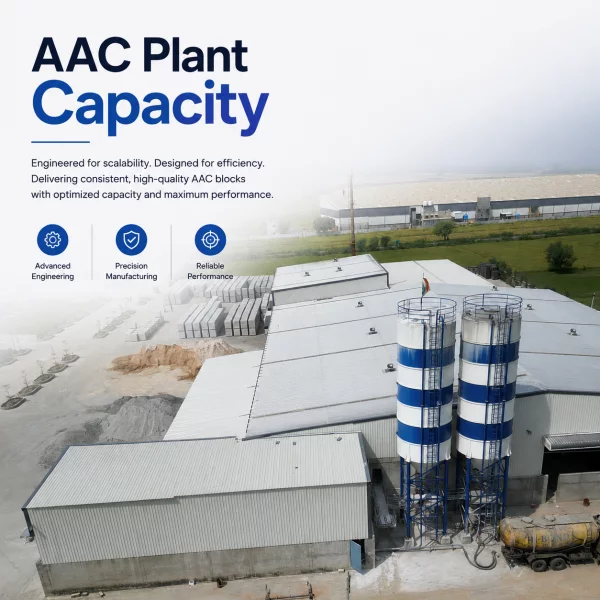
AAC Plant Capacity
Choosing an AAC plant capacity isn't only about deciding how many blocks you want to make in a day. The complete product... Continue
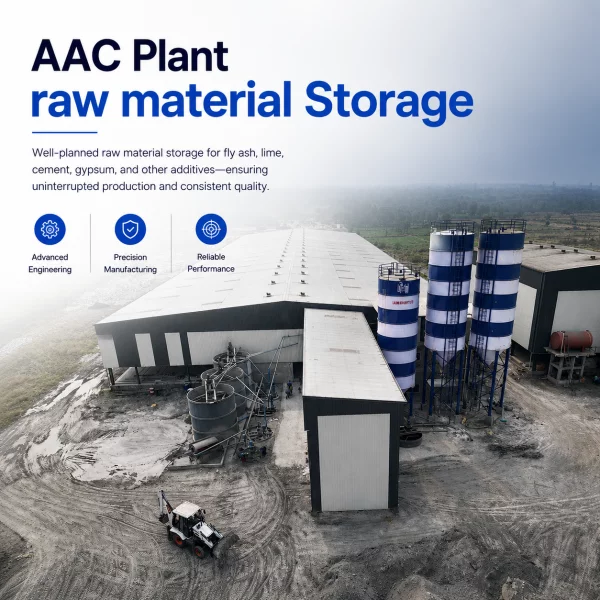
AAC Plant Raw Material Storage
Raw material storage can look like a simple part of an AAC plant, but poor planning here can create problems much later.... Continue
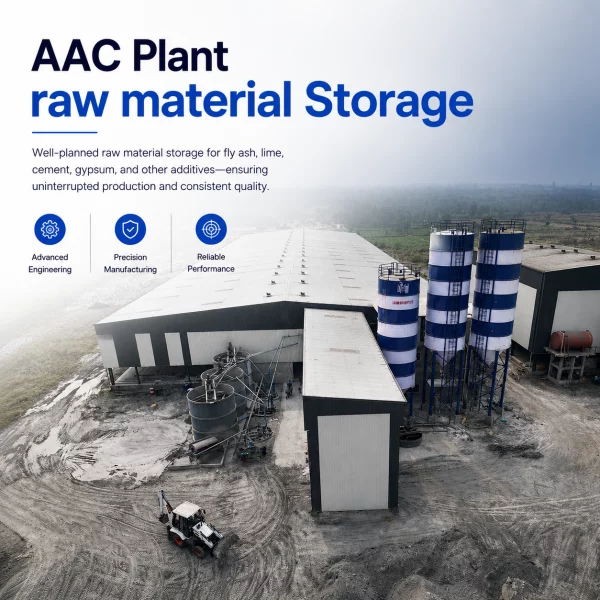
AAC Batching System & Raw Material Preparation
Every AAC block starts with a measured mix. Before the slurry reaches the mould, fly ash or sand, cement, lime, gypsum, ... Continue
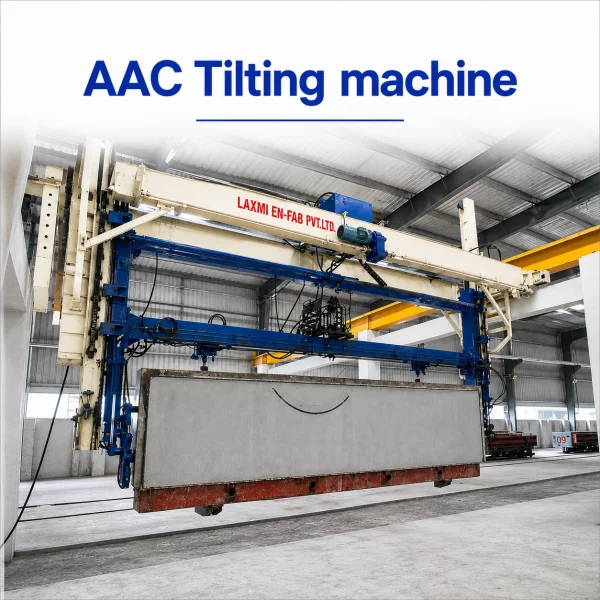
AAC Tilting Machine
There’s a short stage between precuring and cutting where the condition of the green cake can change the result of... Continue
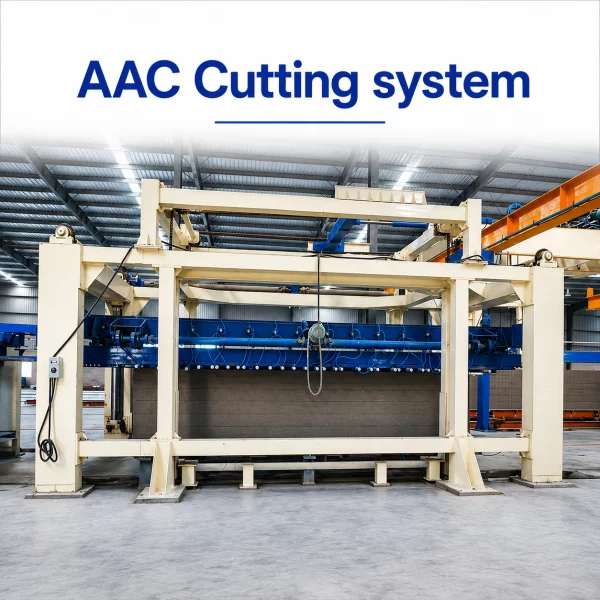
AAC Cutting System
Cutting is the stage where a freshly prepared AAC green cake starts taking the shape of the final block. A good cutting ... Continue
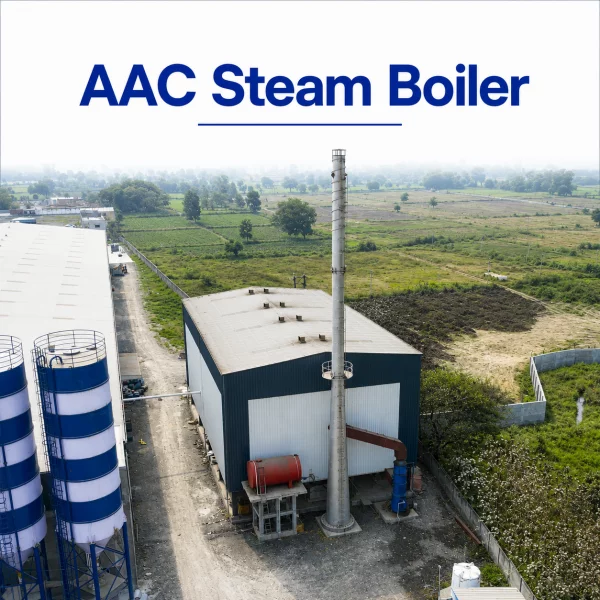
AAC Steam Boiler
In an AAC plant, the autoclave gets much of the attention, but the steam boiler is the part that feeds the entire curing... Continue

AAC Autoclave
Final AAC block strength is not created at the cutting stage alone. The most important transformation happens inside the... Continue
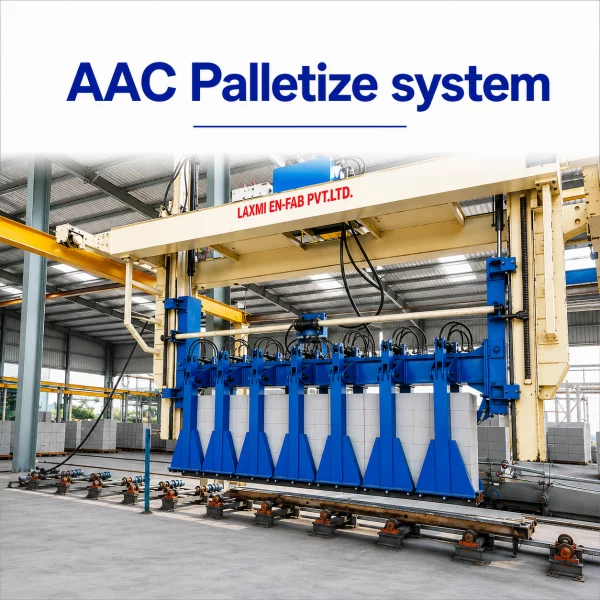
AAC Auto Palletizing System
AAC block production doesn't stop when the autoclave cycle is complete. The finished blocks still have to be unloaded, s... Continue