AAC Cutting System
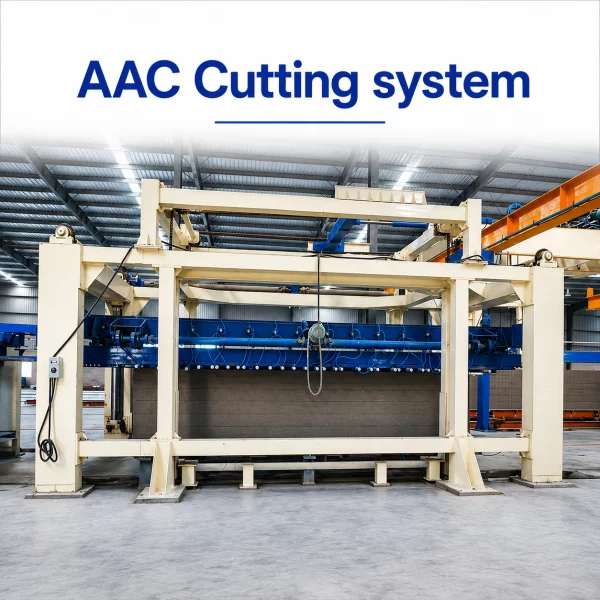
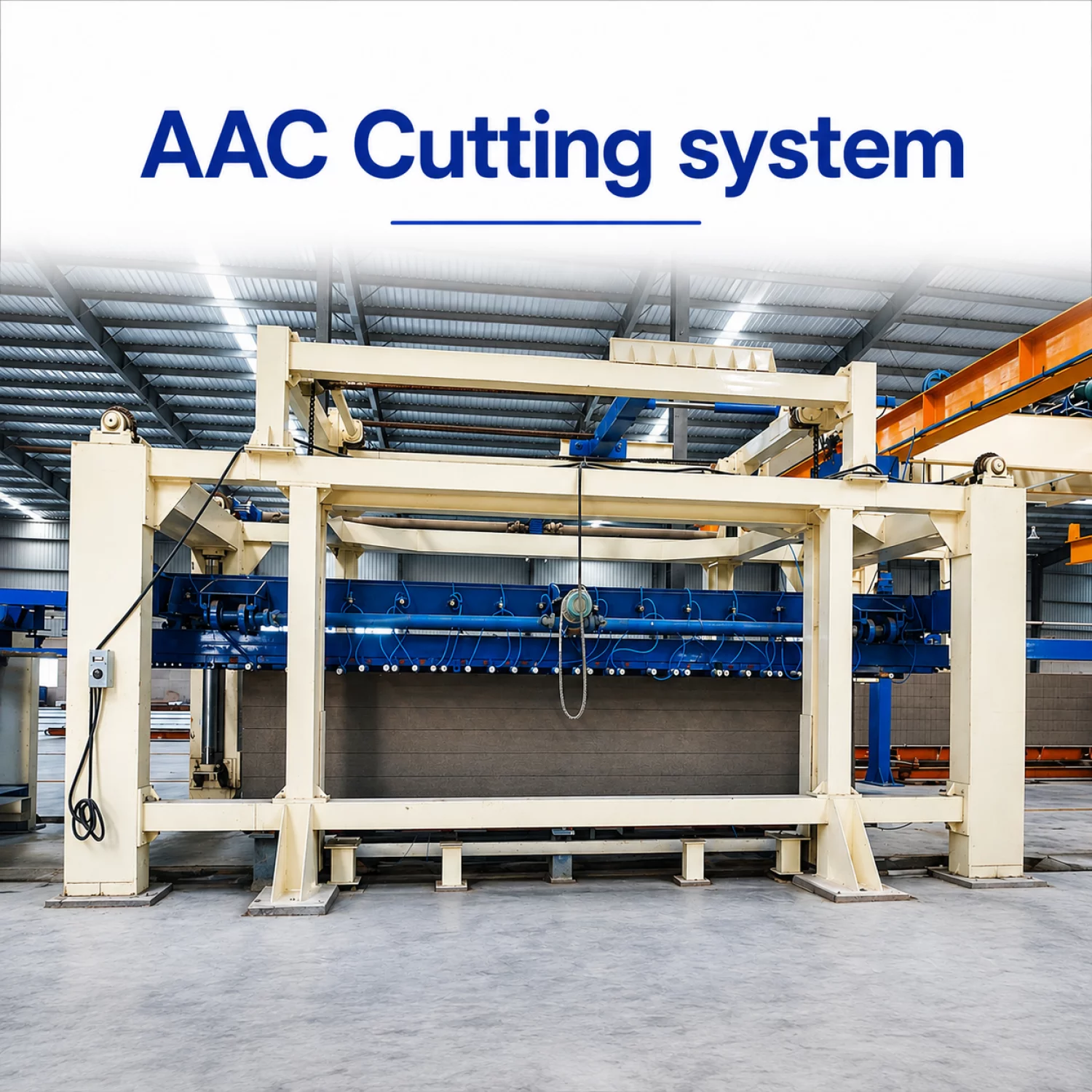
AAC Cutting System Details
Cutting is the stage where a freshly prepared AAC green cake starts taking the shape of the final block. A good cutting process has to be steady, accurate and properly matched with the cake handling system. Even a small movement problem can affect the block surface, corners or dimensions. We manufacture AAC Cutting System in Ahmedabad for AAC block manufacturing plants, with the cutting arrangement planned around block size, production capacity and the required level of automation.
Our AAC Cutting System covers the main cutting stages required to convert the green cake into accurately sized blocks. The arrangement includes face trimming, horizontal cutting and vertical cutting, along with provisions for cutting waste recovery and bottom layer removal.
Three Cutting Steps That Shape the Final Block
The green cake passes through different cutting operations before it moves ahead for autoclaving. Each stage has a separate job, and the settings need to work together.
| Cutting Stage | Main Purpose | What It Controls |
|---|---|---|
| Face Trimming | Removes excess material from the cake face | Face finish and basic block length |
| Horizontal Cutting | Divides the cake horizontally | Block height and thickness |
| Vertical Cutting | Divides the cake vertically | Block width |
Face trimming is carried out in two steps. Major excess material is removed using wire, followed by fine finishing with a blade. The process is designed around a required 600 mm block length. Blade positioning and movement need proper control because poor alignment can lead to surface marks, uneven finishing or corner damage.
Horizontal and Vertical Cutting for Different Block Sizes
After face trimming, horizontal cutting sets the required block height or thickness. The cutting settings can be adjusted according to the block specification. This gives the plant flexibility when different block dimensions are required for different customers or markets.
Vertical cutting then divides the cake into the required widths. The cutting movement needs to stay properly synchronized with cake movement so the same dimensions can be repeated across production batches.
When horizontal and vertical cutting work together correctly, we can produce different AAC block sizes while keeping dimensional variation under control.
Where Cutting Accuracy Makes a Difference
Cutting isn't only about getting the right size. The quality of this stage can affect the appearance and condition of the finished AAC blocks. Smooth cake movement, correct wire positioning and controlled blade movement help reduce unnecessary damage during cutting.
- More consistent block dimensions
- Better face trimming and surface finish
- Reduced corner damage during cutting
- Lower cutting variation
- Better visual appearance of finished blocks
- Reduced material loss from poor cutting
- Flexibility for different block sizes
AAC Cutting System selection should also consider how the machine connects with the tilting, cake handling and further processing sections. A cutting machine working well on its own isn't enough if cake movement before and after cutting creates delays or unwanted jerks.
Turning Cutting Waste Back Into Useful Material
Cutting creates excess AAC material. Instead of treating all of this material as waste, the cutting system can collect it through a cutting trench, where it can be processed into slurry and reused in the plant.
Depending on the raw material and process conditions, recovered cutting waste may contribute around 20–25% of the slurry required for a new batch. The actual recovery level depends on the plant process and the quality of the recovered slurry.
There is one practical point here: slurry handling needs regular attention. If a conventional trench circulation system runs continuously, the slurry pump, trench and pipelines need proper cleaning and maintenance. Accumulation can lead to pump choking or pipeline blockage.
Waste Transfer Options for Easier Maintenance
Where continuous slurry circulation isn't preferred, an additional waste-transfer attachment can move cutting waste directly towards the waste slurry tank. This can reduce dependence on continuous trench pumping and make the cutting area easier to maintain.
The right arrangement depends on the plant layout, slurry process and maintenance approach. It's better to decide this while planning the complete AAC block plant instead of modifying the system later.
Handling the Bottom Layer After Cutting
Some excess material can remain on the bottom of the cake plate after cutting. Conventional handling may require the cake to be tilted around 90° to separate this material and then tilted back. This process is commonly known as bottom layer removal.
A suitable removal arrangement can reduce manual work in this section and help keep the cake plate cleaner before the next stage of processing.
Key Points to Check Before Selecting the System
| Selection Point | What to Check |
|---|---|
| Cutting Accuracy | Repeatability of required block dimensions |
| Cake Movement | Smooth transfer with minimum sudden movement |
| Face Finishing | Wire trimming and blade finishing arrangement |
| Size Adjustment | Ability to set different block dimensions |
| Waste Recovery | Cutting trench and slurry transfer arrangement |
| Bottom Layer | Method used for removing excess material |
| Maintenance | Access to pumps, trenches, wires and moving parts |
| Plant Integration | Compatibility with cake handling and overall AAC plant layout |
Designed Around the Actual AAC Plant
We supply AAC Cutting System in Ahmedabad, Gujarat and for AAC block plants across India. We can plan the cutting arrangement according to production capacity, required block dimensions, cake handling method, waste recovery process and the overall plant layout.
If you're setting up a new AAC block manufacturing plant or upgrading an existing cutting section, share your required block sizes and plant capacity with us. We'll help you review the cutting arrangement and select a practical system for your production requirements.
Related Products
AAC Block Manufacturing Unit
Starting an AAC block production business needs more than arranging a few machines on a factory floor. The complete proc... Continue
AAC Plant Capacity
Choosing an AAC plant capacity isn't only about deciding how many blocks you want to make in a day. The complete product... Continue
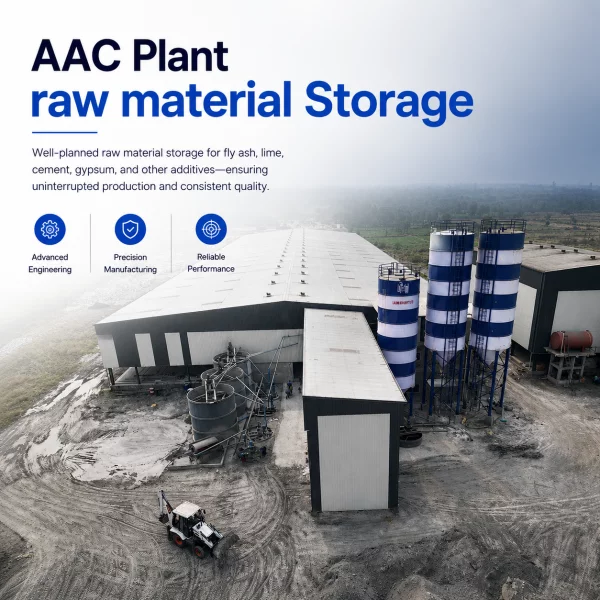
AAC Plant Raw Material Storage
Raw material storage can look like a simple part of an AAC plant, but poor planning here can create problems much later.... Continue
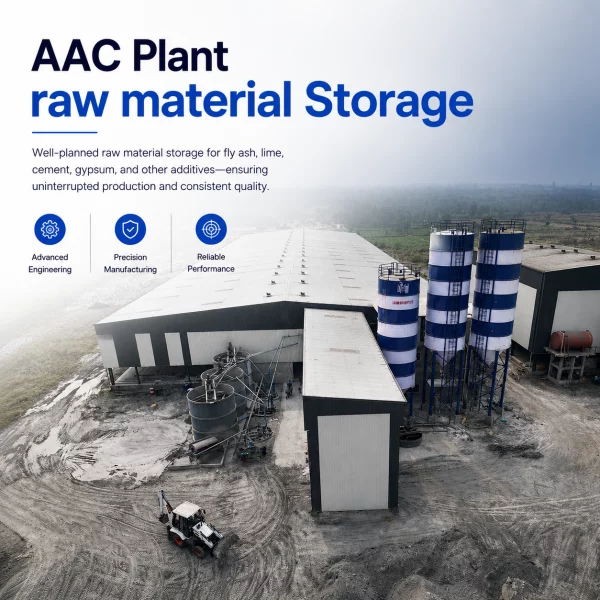
AAC Batching System & Raw Material Preparation
Every AAC block starts with a measured mix. Before the slurry reaches the mould, fly ash or sand, cement, lime, gypsum, ... Continue
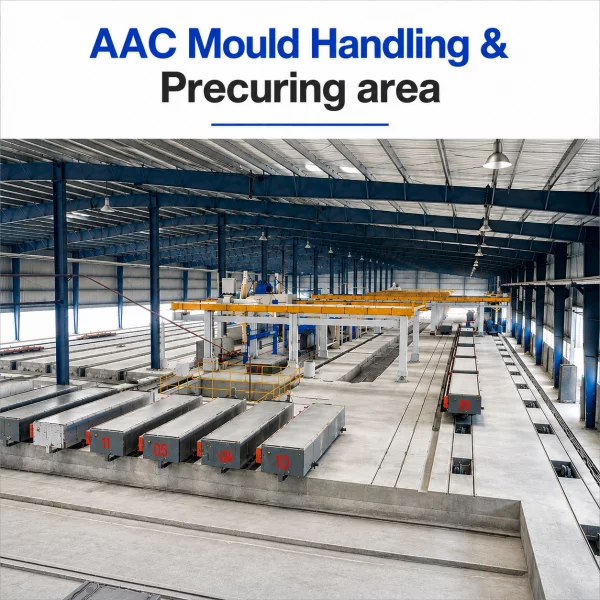
AAC Mould Handling & Precuring
Once the AAC slurry is poured into a mould, the production process has only started. The filled mould has to move to pre... Continue
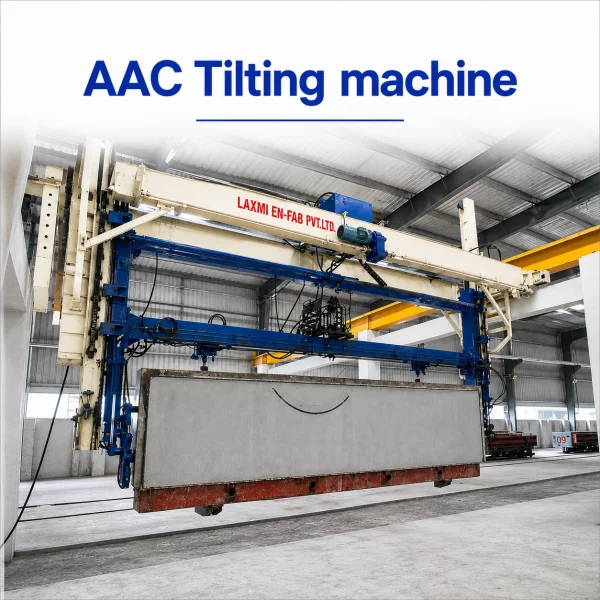
AAC Tilting Machine
There’s a short stage between precuring and cutting where the condition of the green cake can change the result of... Continue
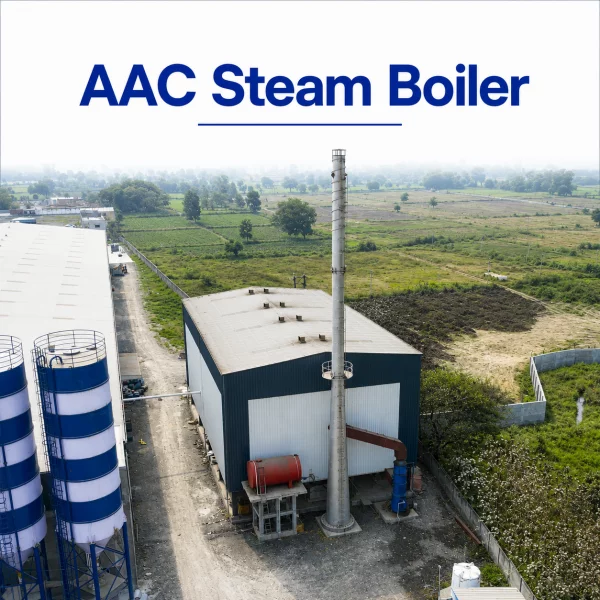
AAC Steam Boiler
In an AAC plant, the autoclave gets much of the attention, but the steam boiler is the part that feeds the entire curing... Continue

AAC Autoclave
Final AAC block strength is not created at the cutting stage alone. The most important transformation happens inside the... Continue
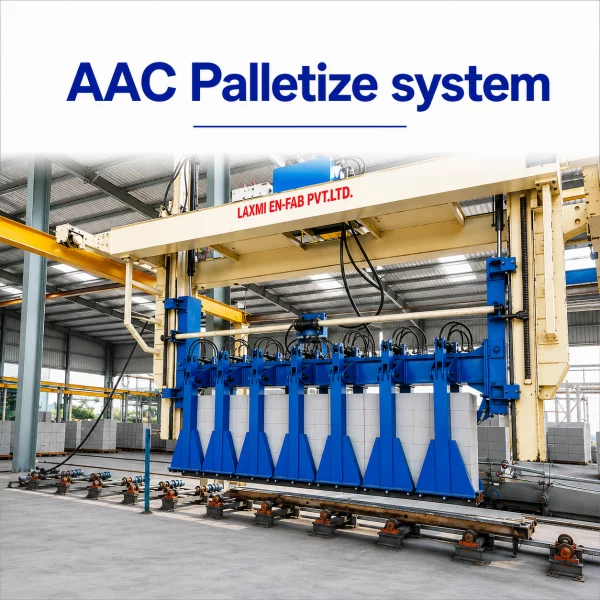
AAC Auto Palletizing System
AAC block production doesn't stop when the autoclave cycle is complete. The finished blocks still have to be unloaded, s... Continue