AAC Plant Raw Material Storage
AAC Plant Raw Material Storage Details
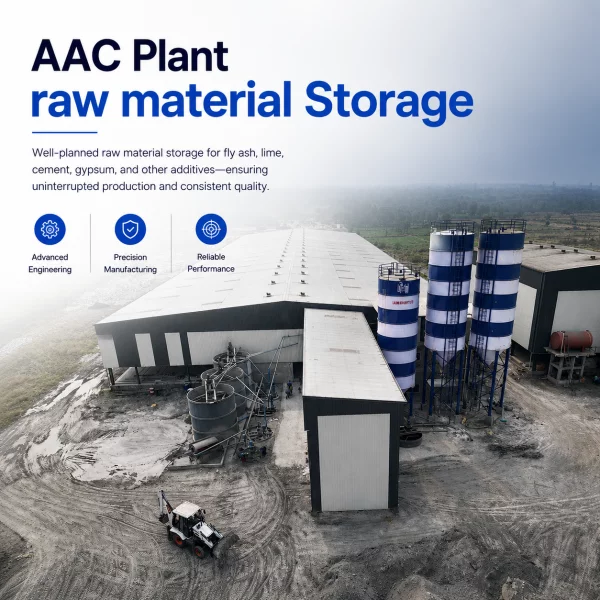
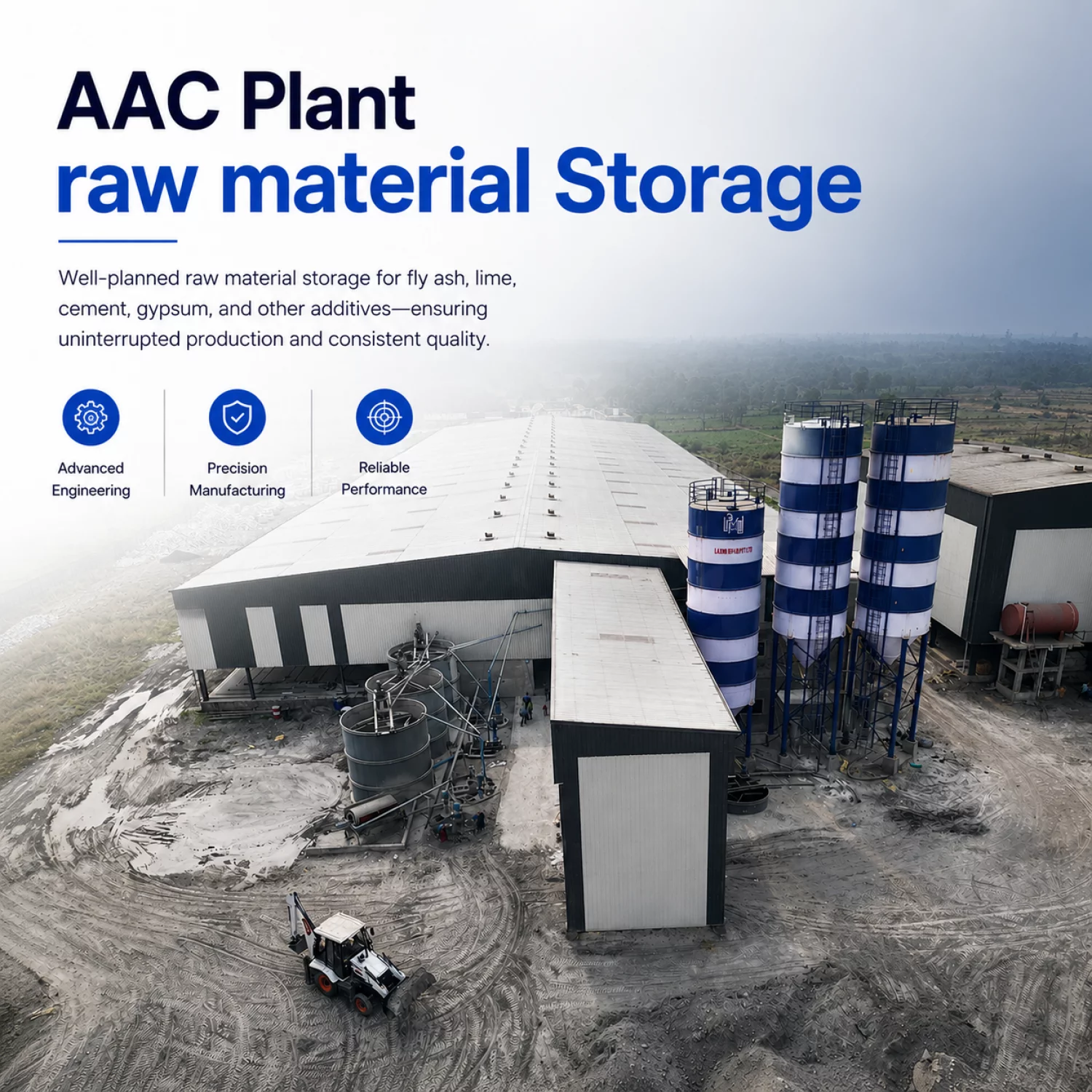
Raw material storage can look like a simple part of an AAC plant, but poor planning here can create problems much later. Material may arrive late, handling can become difficult, dust can spread around the plant, or the batching section may have to wait for supply. We manufacture AAC Plant Raw Material Storage systems in Ahmedabad with storage and transfer arrangements planned around the material type, plant capacity, supply method and future production needs.
Different Materials Need Different Storage Arrangements
An AAC plant handles several raw materials, and each one behaves differently. Fly ash, cement and lime are dry bulk materials that suit silo storage. Pond ash and sand are generally handled in an open stockyard. Gypsum and aluminium powder need separate arrangements because their quantity and handling requirements are different.
| Raw Material | Common Supply | Storage | Typical Transfer |
|---|---|---|---|
| Fly Ash | Bulker | Silo | Roots blower |
| Cement | Bulker / Bags | Silo | Roots blower / Stationary bulker |
| Lime | Approx. 1-ton bags | Silo | Stationary bulker + Roots blower |
| Gypsum | Bags | Manual storage / Silo | Manual / Automatic |
| Aluminium Powder | Bags | Controlled storage | Dosing system |
| Pond Ash | Bulk | Open stockyard | Loader |
| Sand | Bulk | Open stockyard | Loader |
| Boiler Fuel | Bulk | Boiler shed / Hopper | Fuel feeding system |
Silo Storage for High-Volume Dry Materials
Fly ash, cement and lime are normally stored in silos when the plant handles them in larger quantities. A silo gives a cleaner storage arrangement and connects well with pneumatic conveying and automatic batching.
For fly ash, the usual route is bulker unloading followed by pneumatic transfer through a Roots blower and pipeline into the fly ash silo. Cement can follow a similar route. If bulk cement supply isn't practical at the project location, a stationary transfer bulker can be used before pneumatic conveying.
Lime often arrives in bags of around one tonne. An overhead crane can be used to place the bags into a stationary bulker, after which the material is conveyed to the lime silo through a Roots blower.
Don't Plan Silo Capacity Only for Current Production
Silo capacity has a direct connection with raw material supply and future production. A plant may start at one capacity and add equipment later. If the original storage arrangement has no room for expansion, adding another silo can involve civil work, foundations, structural changes, new pipelines and installation downtime.
We consider the planned production level along with realistic future expansion while working out the storage arrangement. The final capacity still depends on your mix design, raw material consumption and delivery schedule.
Open Stockyards for Sand and Pond Ash
Sand and pond ash are generally stored in an open stockyard and moved with a tractor or wheel loader. These materials aren't normally handled through the same pneumatic system used for dry fly ash.
Stockyard planning needs more than just calculating the pile area. We consider daily consumption, truck delivery frequency, required stock level, plant capacity, vehicle movement and future expansion. Drainage and site conditions also matter. Where dust needs to be controlled, covered storage or controlled water sprinkling can be considered, but excess moisture shouldn't create new material-handling problems.
Special Care for Gypsum and Aluminium Powder
Gypsum is generally consumed in smaller quantities, so manual storage and dosing can work for some plants. Larger AAC plants can use dedicated gypsum storage and automatic feeding to reduce repeated manual handling.
Aluminium powder needs more careful storage and handling because of its flammable nature. We treat it separately from ordinary bulk powders. In an automated AAC plant, aluminium powder can be dosed and mixed with chilled water to prepare aluminium slurry before it enters the production process.
Boiler Fuel Storage Depends on the Plant
Fuel storage is linked with the selected boiler, fuel type and consumption rate. A normal-capacity plant may use a boiler shed or storage area, while a higher-capacity plant can require a dedicated fuel hopper for more controlled feeding.
Important Points for Storage Planning
| Planning Point | What We Consider |
|---|---|
| Production Capacity | Daily AAC block output and related material consumption |
| Mix Design | Quantity required for each raw material |
| Supply Frequency | How often trucks or bulkers can deliver materials |
| Material Form | Bulk, bagged, dry powder or other form |
| Site Layout | Available space, vehicle movement and civil requirements |
| Future Expansion | Scope for additional storage and production capacity |
Connecting Storage With the Main AAC Process
Storage works best when it's planned as part of the complete material flow. A typical arrangement moves material through:
Raw Material Receiving → Bulk or Bag Unloading → Silo / Stockyard Storage → Pneumatic Conveying or Loader Handling → Raw Material Preparation → Batching → Slurry Preparation → AAC Production
The exact setup depends on your plant capacity, raw material availability, formulation, site layout and level of automation. We manufacture and supply AAC Plant Raw Material Storage systems in Ahmedabad for AAC block plants across Gujarat and India, with arrangements planned around the actual production process. If you're planning a new AAC plant or expanding an existing one, share your production capacity and raw material details with us to discuss the suitable storage arrangement.
Related Products
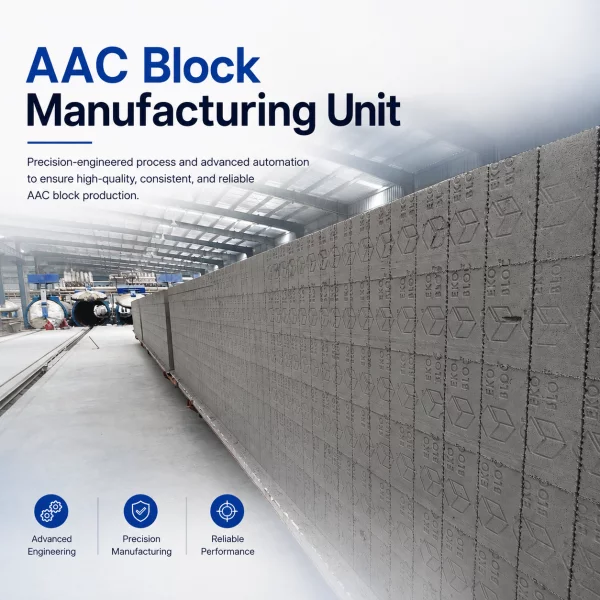
AAC Block Manufacturing Unit
Starting an AAC block production business needs more than arranging a few machines on a factory floor. The complete proc... Continue
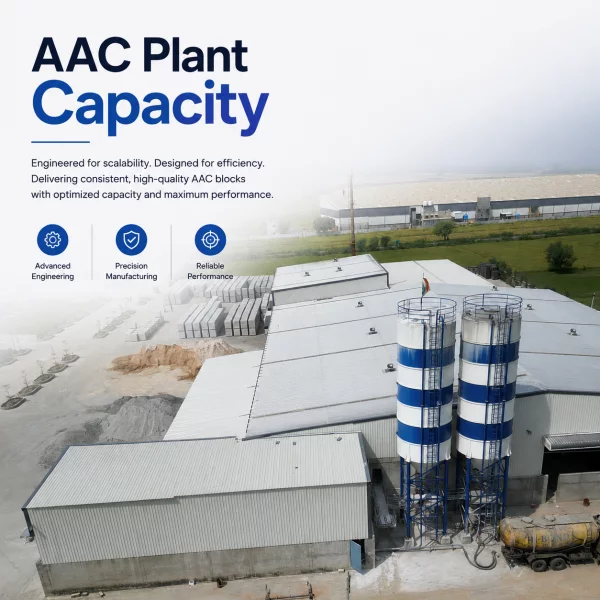
AAC Plant Capacity
Choosing an AAC plant capacity isn't only about deciding how many blocks you want to make in a day. The complete product... Continue
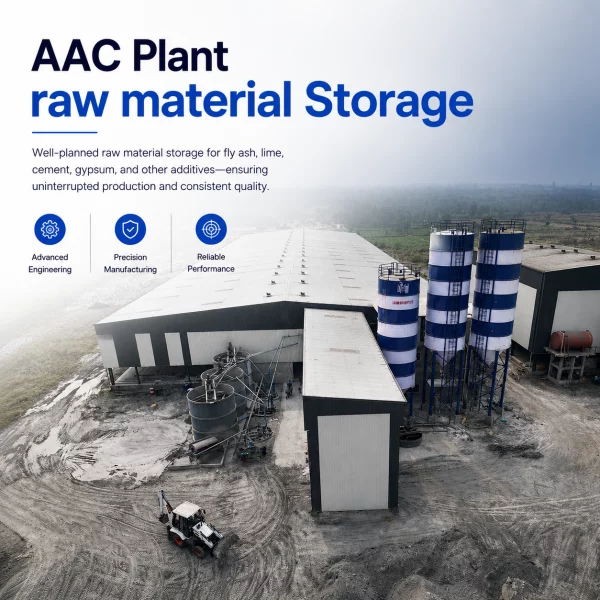
AAC Batching System & Raw Material Preparation
Every AAC block starts with a measured mix. Before the slurry reaches the mould, fly ash or sand, cement, lime, gypsum, ... Continue
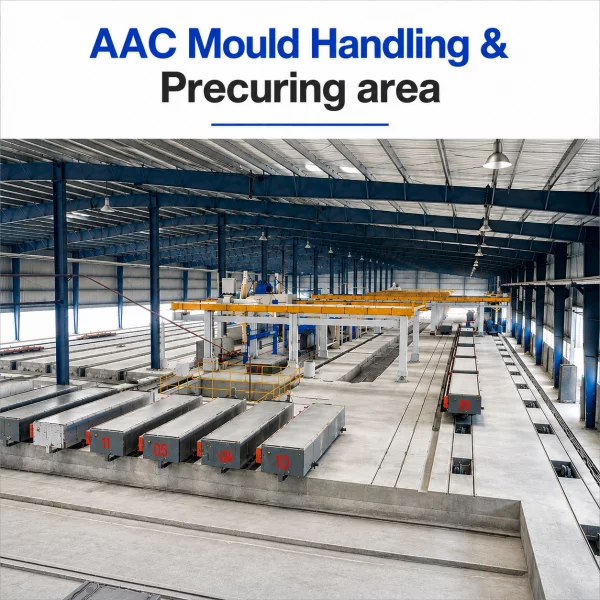
AAC Mould Handling & Precuring
Once the AAC slurry is poured into a mould, the production process has only started. The filled mould has to move to pre... Continue
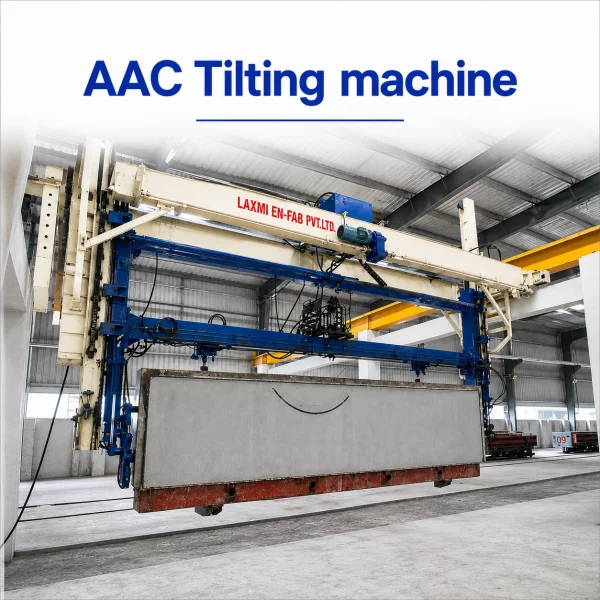
AAC Tilting Machine
There’s a short stage between precuring and cutting where the condition of the green cake can change the result of... Continue
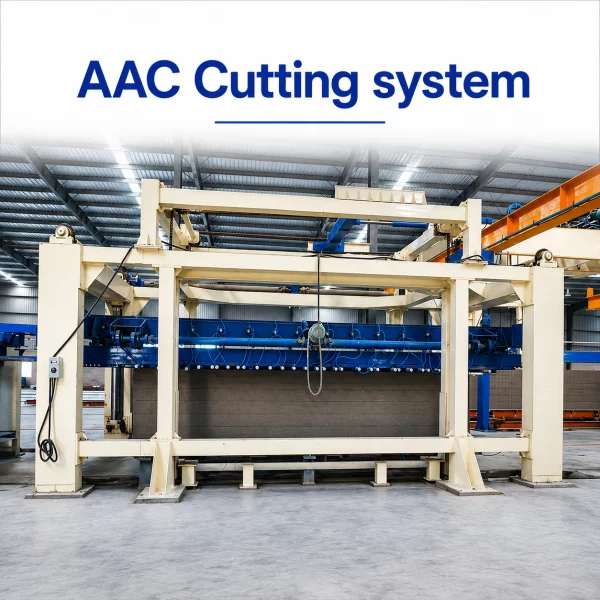
AAC Cutting System
Cutting is the stage where a freshly prepared AAC green cake starts taking the shape of the final block. A good cutting ... Continue
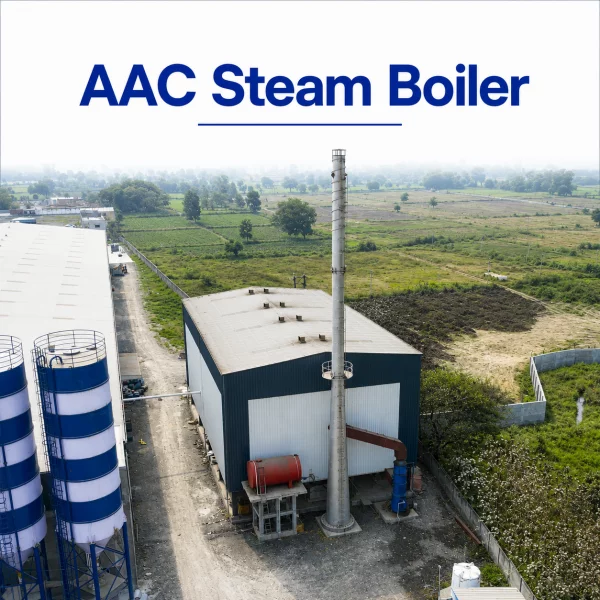
AAC Steam Boiler
In an AAC plant, the autoclave gets much of the attention, but the steam boiler is the part that feeds the entire curing... Continue
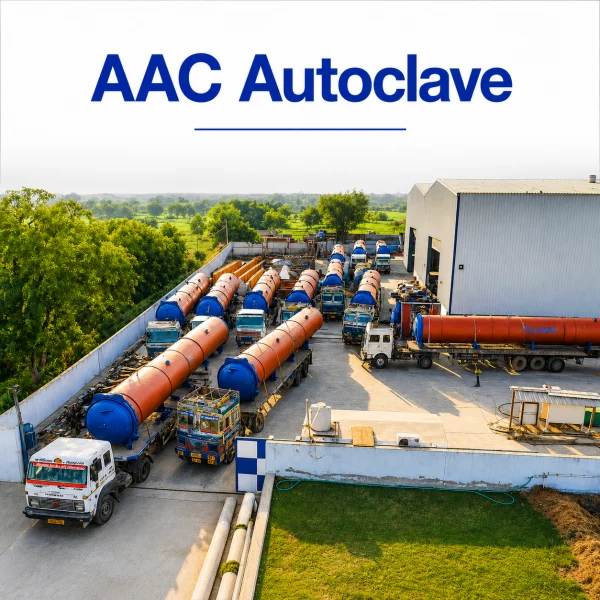
AAC Autoclave
Final AAC block strength is not created at the cutting stage alone. The most important transformation happens inside the... Continue
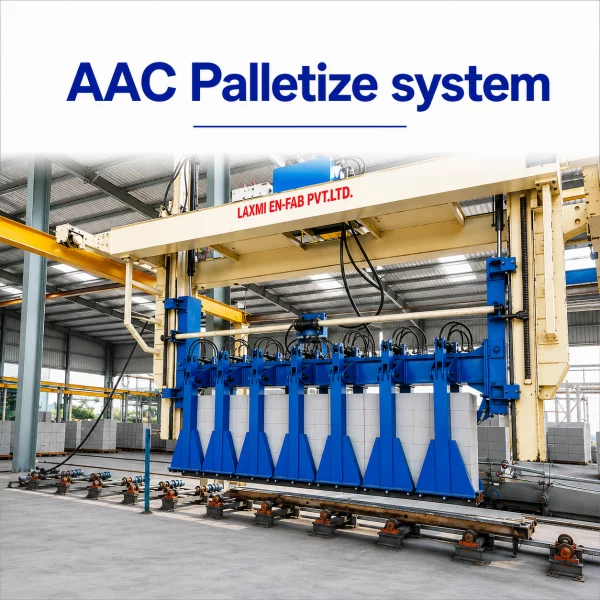
AAC Auto Palletizing System
AAC block production doesn't stop when the autoclave cycle is complete. The finished blocks still have to be unloaded, s... Continue