AAC Plant Capacity
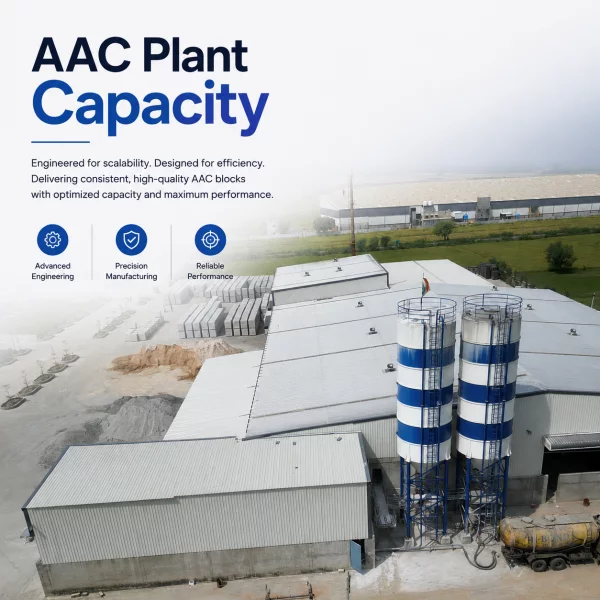
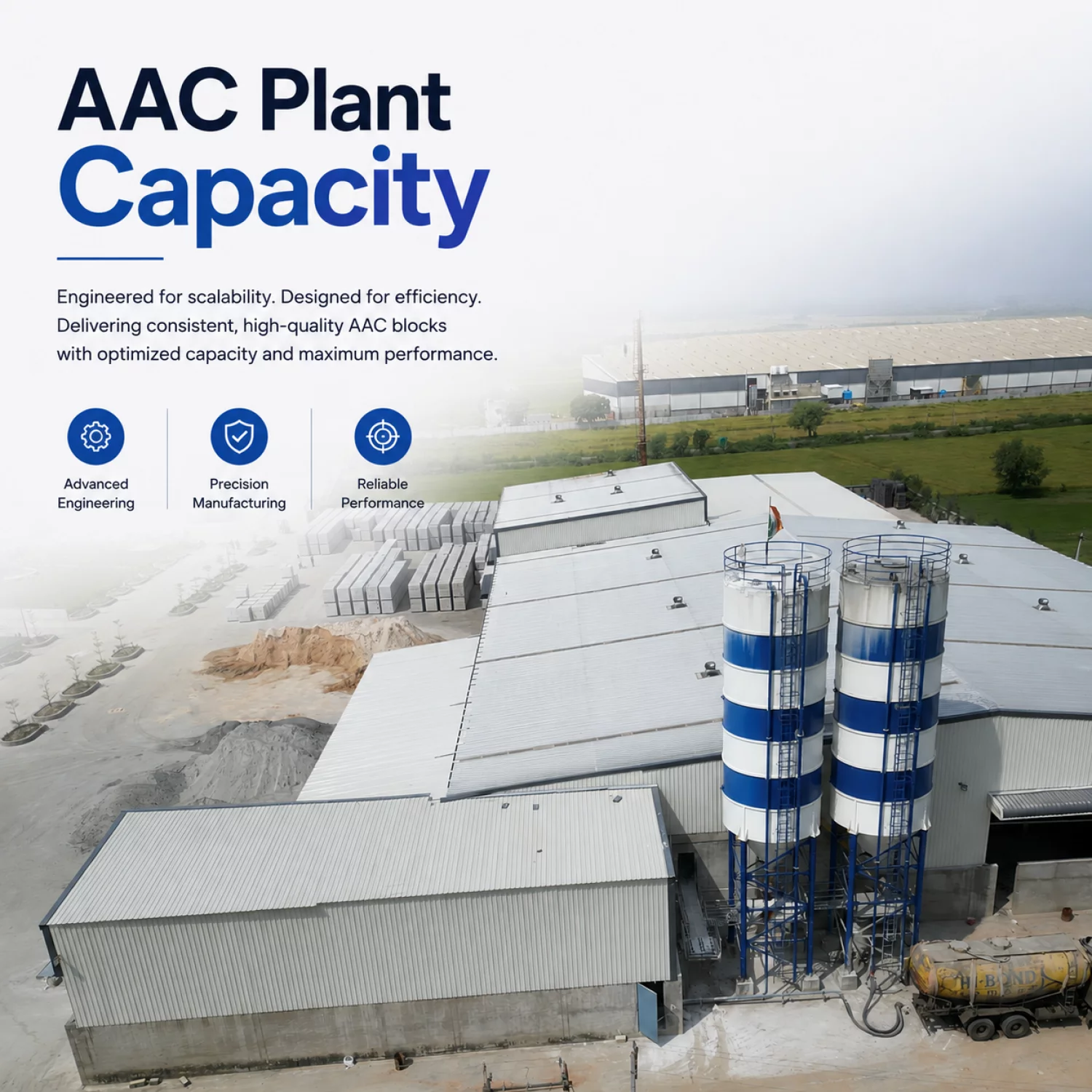
AAC Plant Capacity Details
Choosing an AAC plant capacity isn't only about deciding how many blocks you want to make in a day. The complete production line has to work together. Batch size, mould cycle, cutting speed, autoclave loading, steam supply, raw material handling and automation all affect the actual output. We plan AAC plant capacity around these connected parts so the production line works as one system.
Production Capacity Can Be Planned Around Your Business
We offer AAC plant configurations starting from around 100 CBM/day and can plan high-capacity automated plants of 1,500+ CBM/day. The suitable capacity depends on the production target, market demand, investment plan, site conditions and expected plant utilization.
| Plant Capacity Range | Typical Planning Approach | Suitable Considerations |
|---|---|---|
| 100 CBM/day and above | Smaller production configuration | Initial market entry and controlled production |
| Medium-capacity plants | Matched production and handling systems | Regular market supply and planned expansion |
| High-capacity plants | Higher automation and integrated handling | Large production targets and continuous operation |
| 1,500+ CBM/day | High-capacity automated configuration | Large-scale AAC block production |
These ranges are planning references, not a fixed production promise for every plant. Actual output depends on the selected equipment, production cycle, raw material conditions, operating schedule and plant design.
What Actually Decides the Daily Output
An AAC plant has several sections, and a limitation in one section can affect the whole production line. For example, increasing the mixer capacity alone won't increase finished block output if mould handling, cutting or autoclaving can't support the same production rate.
We match the main equipment around the selected production target, including:
- Raw material storage and preparation
- Batching and slurry preparation
- Mixing system
- Mould filling and handling
- Precuring arrangement
- AAC tilting system
- AAC cutting system
- Steam boiler
- AAC autoclaves
- Finished block handling and palletizing
This matching becomes more important as capacity increases. A high-output plant needs the material flow and utility systems to keep up with the production cycle rather than creating waiting time between stages.
Batch Size and Production Cycle Work Together
Batch size is one of the basic numbers used while planning an AAC plant. The amount of slurry produced in one batch, the number of moulds available, precuring time and cutting cycle all have to fit together.
The production cycle also affects how many batches can be completed during a working day. Precuring time, cake handling, cutting, mould return and filling all take time. Autoclaving adds another important cycle to the process. We consider these stages together while working out the plant configuration.
Automation Changes the Way Capacity Is Planned
A smaller AAC plant may use more manual or semi-automatic handling in selected areas. Higher production targets generally need more automated material transfer, mould handling, cutting, stacking and finished block movement.
| Plant Section | Capacity Planning Focus |
|---|---|
| Raw Material Handling | Storage volume, material transfer and supply frequency |
| Batching & Mixing | Batch size, dosing and mixing cycle |
| Mould Handling | Number of moulds and movement between stages |
| Cutting | Cake movement and required block sizes |
| Autoclaving | Autoclave quantity, size and cycle requirement |
| Boiler | Steam requirement and peak demand |
| Finished Block Handling | Stacking, palletizing and stockyard movement |
Don't Choose Capacity Only From Market Demand
Market demand matters, but it's only one part of the decision. A plant running below its planned utilization can carry higher fixed costs per unit. On the other hand, selecting a capacity that's too small can make future expansion difficult.
We suggest looking at expected sales, local construction activity, available land, raw material supply, power and fuel availability, manpower, working capital and realistic future expansion before finalizing the production capacity.
Planning for Growth Without Overbuilding
Future expansion can be included during the initial plant planning stage. Space for additional equipment, silo foundations, utility arrangements, material movement and stockyard expansion can be considered from the beginning.
This approach gives the project room to grow without making the first setup unnecessarily large. The right balance is to select equipment around today's realistic production requirement while keeping practical expansion options open.
A Complete AAC Plant Is More Than a Capacity Number
Our AAC plant configurations are planned as complete production systems. We match batching, mixing, mould handling, cutting, autoclaving, steam generation, material movement and automation around the selected output requirement.
Whether you're planning an AAC plant in Ahmedabad, Gujarat or another location in India, the project can be developed around your required CBM/day capacity, available infrastructure and investment plan. Share your expected production capacity, project location and automation requirement with us, and we can discuss a suitable AAC plant configuration for your project.
Related Products
AAC Block Manufacturing Unit
Starting an AAC block production business needs more than arranging a few machines on a factory floor. The complete proc... Continue
AAC Plant Raw Material Storage
Raw material storage can look like a simple part of an AAC plant, but poor planning here can create problems much later.... Continue
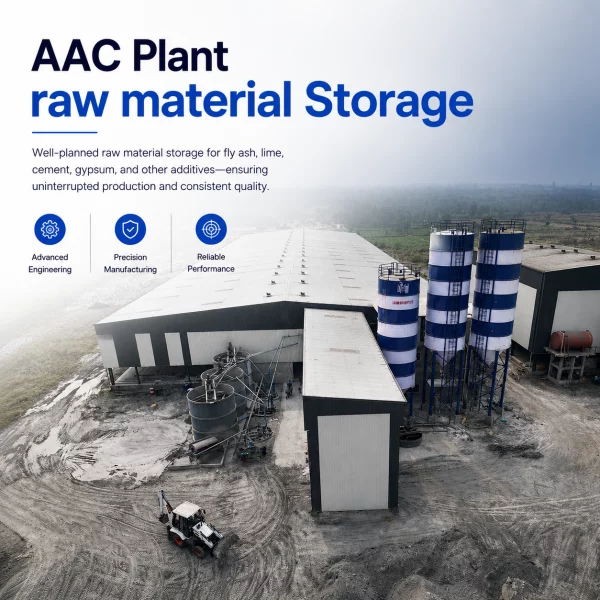
AAC Batching System & Raw Material Preparation
Every AAC block starts with a measured mix. Before the slurry reaches the mould, fly ash or sand, cement, lime, gypsum, ... Continue
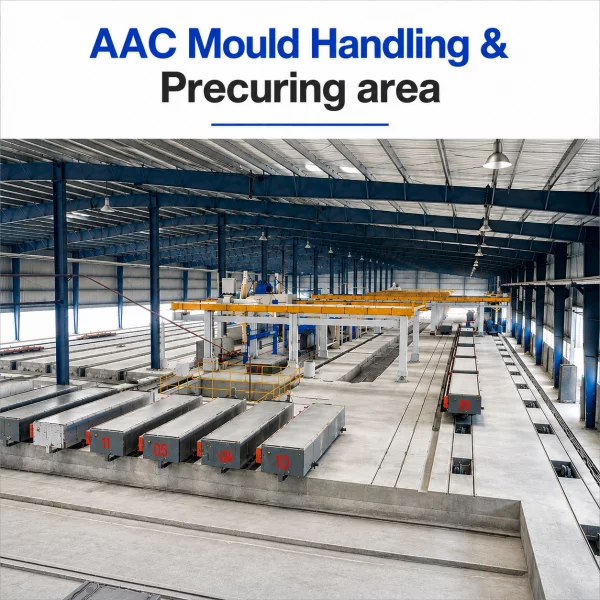
AAC Mould Handling & Precuring
Once the AAC slurry is poured into a mould, the production process has only started. The filled mould has to move to pre... Continue
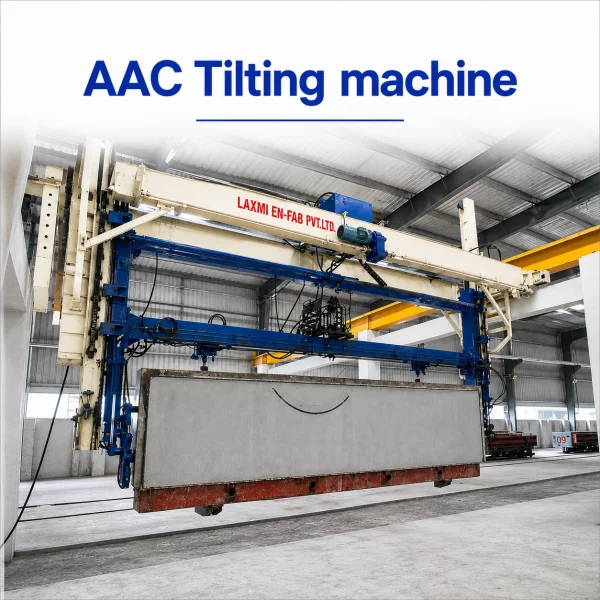
AAC Tilting Machine
There’s a short stage between precuring and cutting where the condition of the green cake can change the result of... Continue
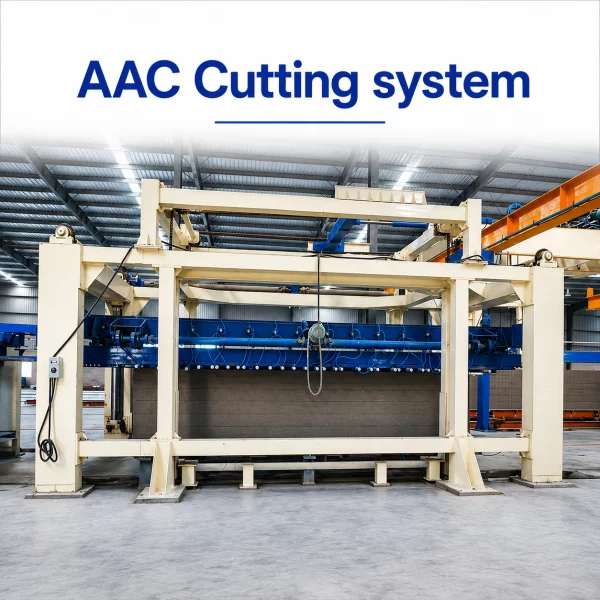
AAC Cutting System
Cutting is the stage where a freshly prepared AAC green cake starts taking the shape of the final block. A good cutting ... Continue
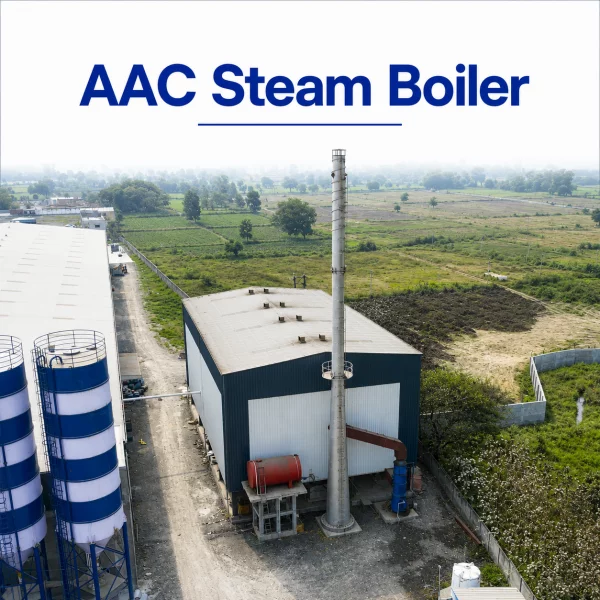
AAC Steam Boiler
In an AAC plant, the autoclave gets much of the attention, but the steam boiler is the part that feeds the entire curing... Continue
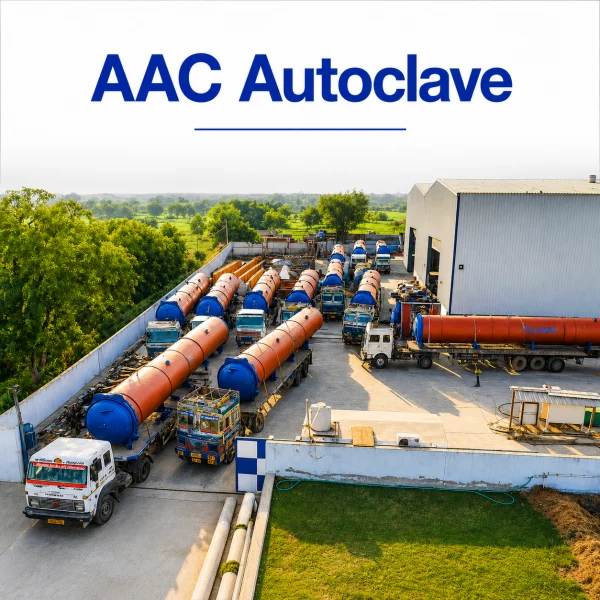
AAC Autoclave
Final AAC block strength is not created at the cutting stage alone. The most important transformation happens inside the... Continue
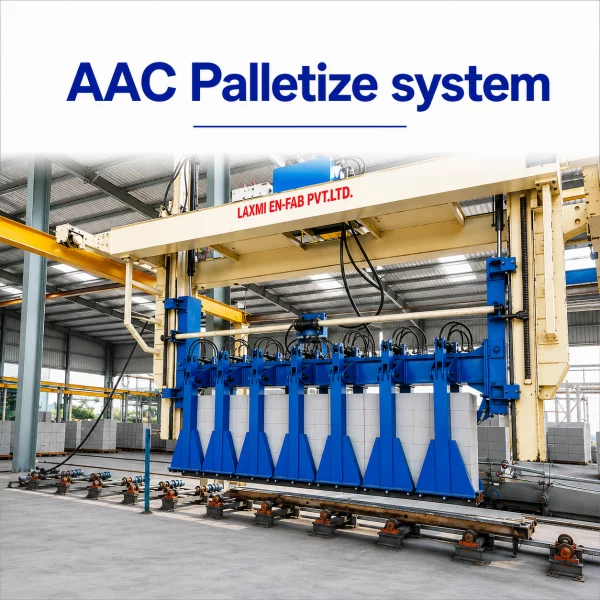
AAC Auto Palletizing System
AAC block production doesn't stop when the autoclave cycle is complete. The finished blocks still have to be unloaded, s... Continue