AAC Auto Palletizing System
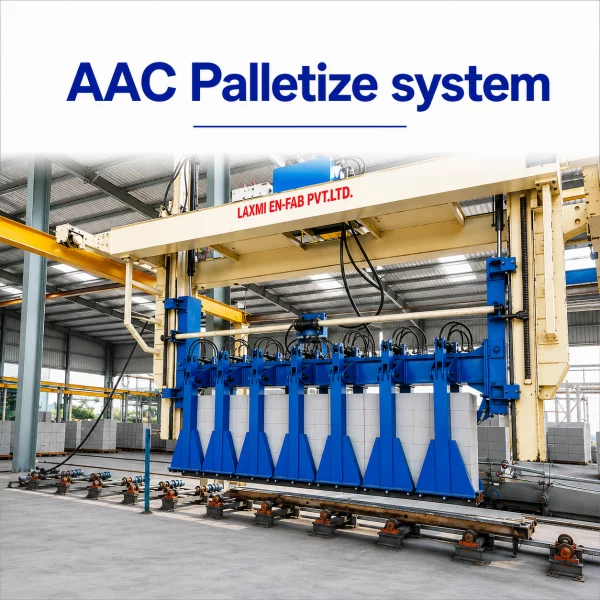
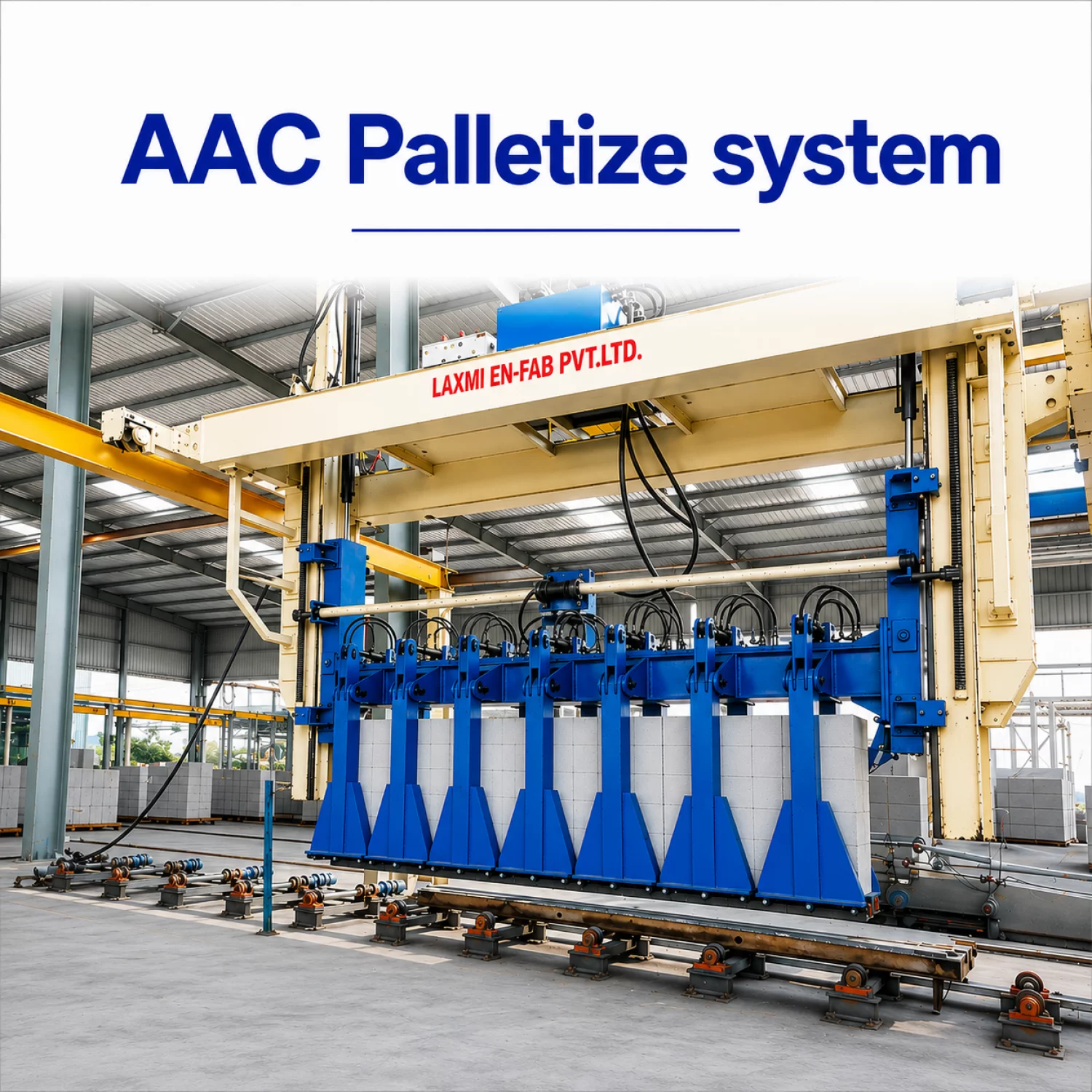
AAC Auto Palletizing System Details
AAC block production doesn't stop when the autoclave cycle is complete. The finished blocks still have to be unloaded, separated, grouped, stacked and shifted to the stockyard. If this work depends fully on manual labour, the handling section can become difficult to manage when plant output increases. We manufacture AAC Auto Palletizing System in Ahmedabad, Gujarat, for AAC plants that need a more organised way to handle finished blocks after autoclaving.
Keeping Finished AAC Blocks Moving After Autoclaving
The main job of an AAC Auto Palletizing System is simple: move finished AAC blocks from the autoclave section towards storage in a planned sequence. The system can handle cake unloading through the plant's handling arrangement, transfer the material between stages, segregate and group blocks, and place them into the required stacking pattern.
For smaller AAC plants, manual handling may still make practical sense. Once production volume becomes higher, repeated unloading and stacking can consume more manpower and time. That's where automatic handling starts becoming useful.
| Handling Stage | Work Performed | Plant Requirement |
|---|---|---|
| Cake Unloading | Unloading finished AAC cake from the autoclave | Connected with the plant handling arrangement |
| Automatic Transfer | Moving material between handling sections | Controlled movement |
| Segregation | Separating blocks as required | Based on product mix and handling plan |
| Grouping | Arranging blocks for stacking | Selected stacking pattern |
| Stacking | Building the required block arrangement | Based on block size and dispatch needs |
| Palletizing | Placing blocks on pallets or suitable transfer arrangement | Based on project layout |
| Stockyard Transfer | Moving finished blocks towards storage | Matched with stockyard arrangement |
Manual Handling Works, Until the Volume Says Otherwise
There's no need to automate every part of an AAC plant simply because automation is available. A smaller production unit with manageable output and labour availability may find manual stacking practical. A medium-capacity plant may need automation in selected handling stages. For higher-capacity plants, the post-autoclaving section can become a serious bottleneck if finished blocks aren't moved at the same pace as production.
We plan the AAC Auto Palletizing System according to the actual project. Plant capacity, block size, production cycle, manpower cost, stockyard design, dispatch method and automation investment all need to be considered before selecting the arrangement.
What Changes When Handling Becomes Automatic?
Manual handling involves repeated movement of finished blocks. Workers need to unload, separate, group and stack material throughout the production day. As output increases, the amount of this work increases along with it.
Automatic handling changes the movement pattern. The blocks follow a planned route from the autoclave section to the stockyard. Grouping and stacking can follow a predefined arrangement, which can make finished block storage more organised.
- Reduces repeated manual handling after autoclaving.
- Supports a continuous movement of finished AAC blocks.
- Provides controlled transfer between handling stages.
- Helps maintain a consistent grouping and stacking pattern.
- Can reduce unnecessary movement of finished blocks.
- Can support stockyard arrangements based on storage and dispatch needs.
- Can be considered for plants where production volume makes manual handling difficult.
Planning the System Around Your Block Production
There isn't one fixed AAC Auto Palletizing System arrangement that suits every plant. Block dimensions and product mix can change the grouping pattern. Production capacity affects the required handling speed. The stockyard and dispatch method also decide where and how the finished blocks should be transferred.
| Planning Factor | Effect on System Arrangement |
|---|---|
| Plant Capacity | Determines the amount of finished material requiring handling. |
| Block Size | Influences segregation, grouping and stacking requirements. |
| Product Mix | Different products may require different handling patterns. |
| Manpower | Helps decide the level of automation required. |
| Stockyard Layout | Defines the movement route for finished blocks. |
| Dispatch Method | Affects palletizing and final transfer requirements. |
| Project Investment | Helps select practical automation instead of unnecessary equipment. |
More Than Conventional Pallet Stacking
Conventional pallets aren't the only option for AAC block handling. Depending on the plant layout and logistics plan, reduced-pallet or palletless transfer arrangements can also be considered. These options can reduce repeated pallet movement and can be planned around the way blocks are stored and dispatched.
The choice should come from the complete plant economics rather than from the automation level alone. A good system needs to fit the production process, available manpower, block sizes, stockyard and dispatch routine.
Designed as Part of an AAC Plant
We manufacture and supply AAC Auto Palletizing System from Ahmedabad for AAC block manufacturing plants across Gujarat and India. Our work covers machinery manufacturing, supply, installation and commissioning. The handling system can be planned along with other AAC plant equipment so the post-autoclaving section fits properly into the complete production flow.
Our related AAC machinery range includes AAC Autoclave, AAC Steam Boiler, AAC Cutting System, AAC Tilting Machine, AAC Mould Handling & Precuring System, AAC Batching System, AAC Raw Material Storage System and other equipment used in AAC block manufacturing plants.
Common Questions About AAC Auto Palletizing
What is an AAC Auto Palletizing System?
It's an automated post-autoclaving handling system used for unloading, transferring, segregating, grouping, stacking and palletizing AAC blocks before they move to the stockyard or dispatch area.
Is automatic palletizing required for every AAC plant?
No. The requirement depends on production capacity, manpower, block size, stockyard arrangement, dispatch method and project economics.
Can palletless handling be planned?
Yes. Reduced-pallet or palletless arrangements can be considered where they suit the plant layout and finished block handling requirements.
Does the system reduce manpower?
It can reduce manual work in the post-autoclaving section. The actual manpower reduction depends on the selected automation level and the overall plant arrangement.
If you're planning an AAC plant in Ahmedabad, Gujarat or anywhere in India and want to improve finished block handling, talk to us about your requirement. Share your production capacity, block sizes, stockyard layout and dispatch plan with our team, and we can discuss a suitable AAC Auto Palletizing System for your project.
Related Products
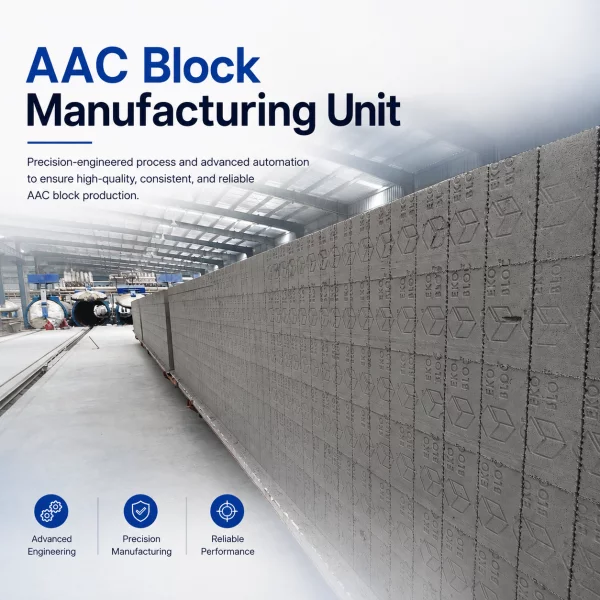
AAC Block Manufacturing Unit
Starting an AAC block production business needs more than arranging a few machines on a factory floor. The complete proc... Continue
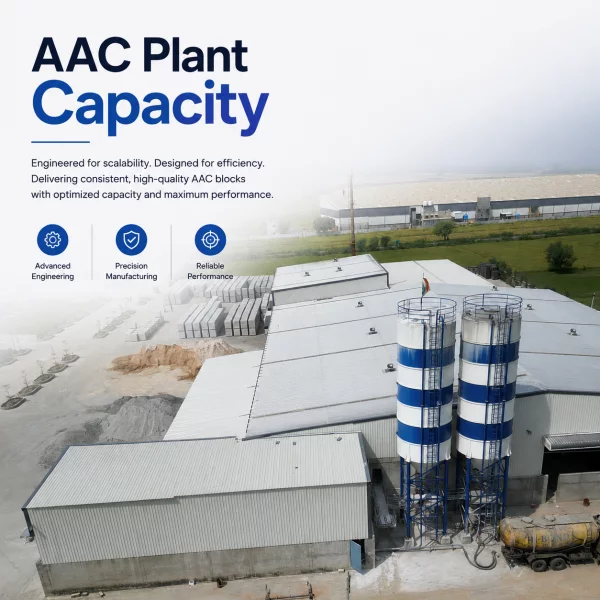
AAC Plant Capacity
Choosing an AAC plant capacity isn't only about deciding how many blocks you want to make in a day. The complete product... Continue
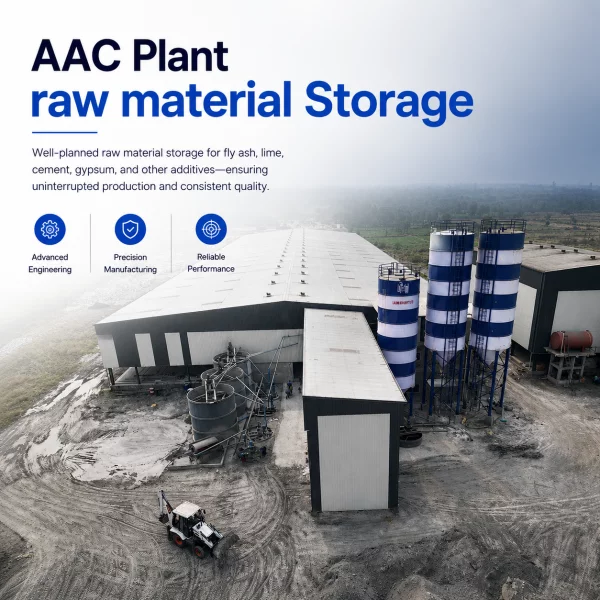
AAC Plant Raw Material Storage
Raw material storage can look like a simple part of an AAC plant, but poor planning here can create problems much later.... Continue
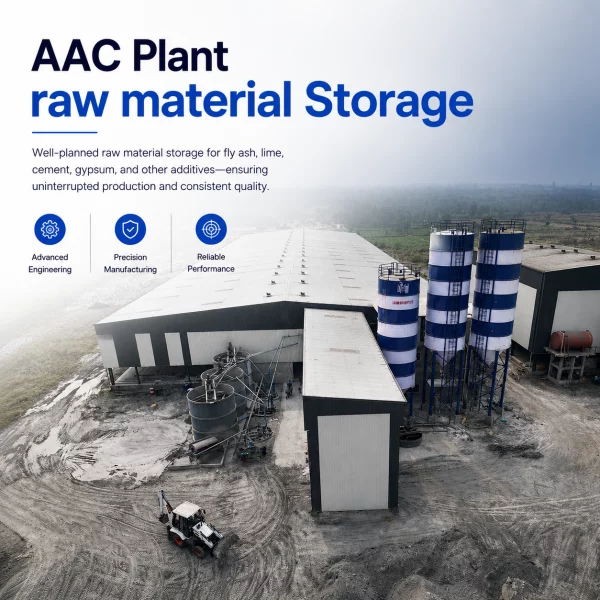
AAC Batching System & Raw Material Preparation
Every AAC block starts with a measured mix. Before the slurry reaches the mould, fly ash or sand, cement, lime, gypsum, ... Continue
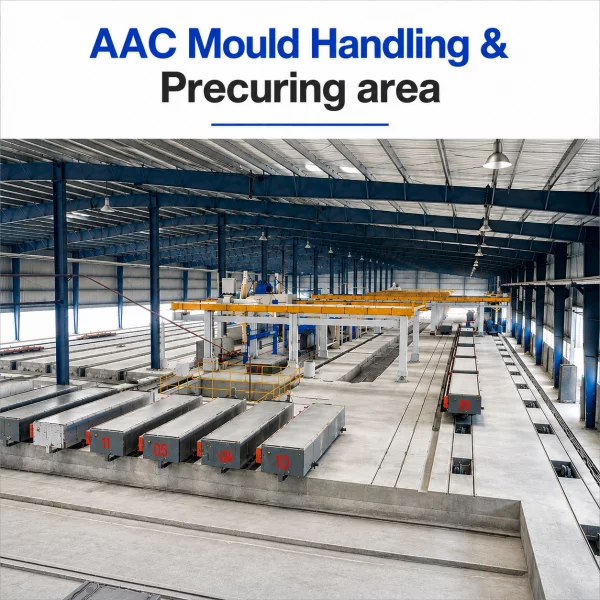
AAC Mould Handling & Precuring
Once the AAC slurry is poured into a mould, the production process has only started. The filled mould has to move to pre... Continue
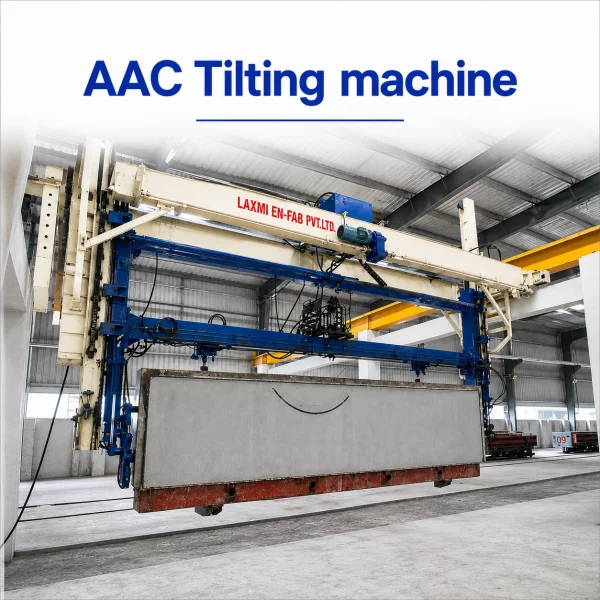
AAC Tilting Machine
There’s a short stage between precuring and cutting where the condition of the green cake can change the result of... Continue
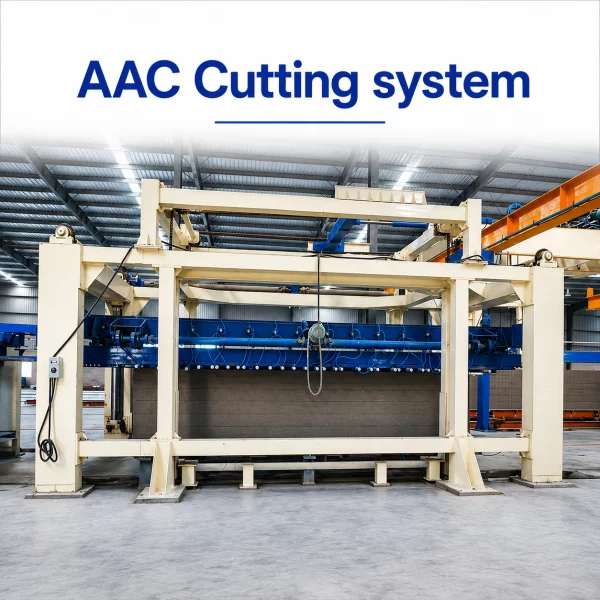
AAC Cutting System
Cutting is the stage where a freshly prepared AAC green cake starts taking the shape of the final block. A good cutting ... Continue
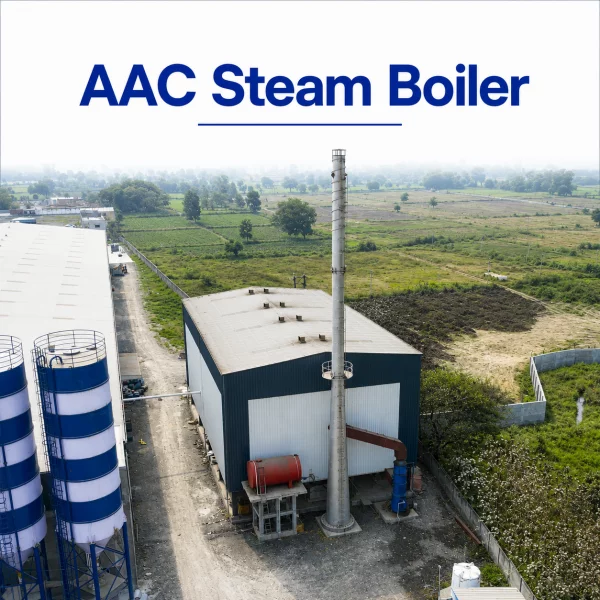
AAC Steam Boiler
In an AAC plant, the autoclave gets much of the attention, but the steam boiler is the part that feeds the entire curing... Continue
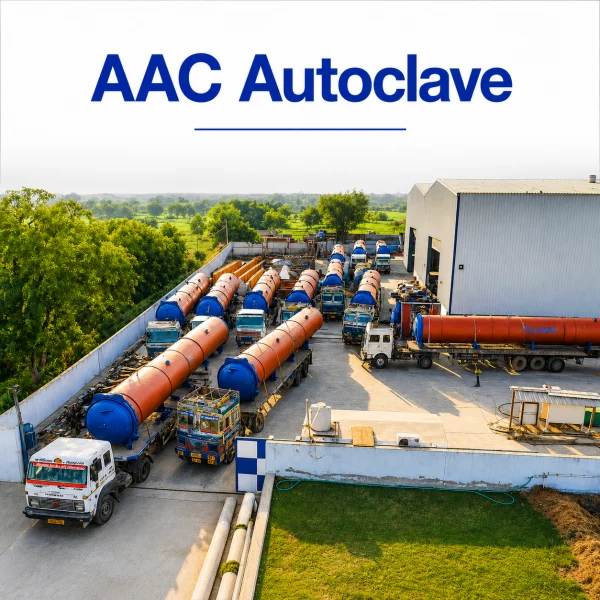
AAC Autoclave
Final AAC block strength is not created at the cutting stage alone. The most important transformation happens inside the... Continue